
Welcome to the history project of our celebration of 150 years of Catholic schools in Portsmouth.

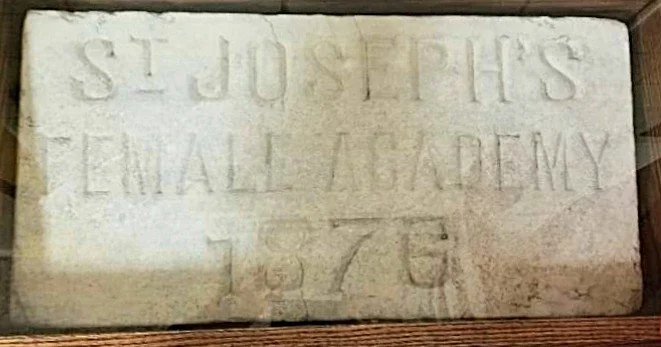
We trace our schools’ beginning to September 1876, when the first of the Sisters of Charity arrived in Portsmouth to take charge of the newly constructed St. Joseph’s Female Academy at Dinwiddie and King streets in downtown Portsmouth.
Our project will involve 150 items in the coming months. Each of the schools we celebrate – St. Joseph’s, St. Paul’s Boys Academy, Our Lady of Victory School, St. Paul’s High School, St. Paul’s Elementary School, School of the Little Flower, Holy Angels School, St. Paul’s Central High School, Portsmouth Catholic High School, Portsmouth Catholic Elementary School and Portsmouth Catholic Regional School – will be represented.
Most of the posts will be stand-alone items. We also will include several series on topics too expansive to be told in one take.
The bulk of our posts will be contemporaneous news coverage of the schools in The Virginian-Pilot and the Ledger-Star and those newspapers’ predecessors. Other stories from the Richmond Times-Dispatch, The Richmond News Leader and The Roanoke Times will appear.
Our overarching goal is to teach you something you didn’t know about our history. We want you to marvel at the schools’ rich legacy and smile at the many memories we’ll share.
-
Description BY BRICE ANDERSON
Class of 1976
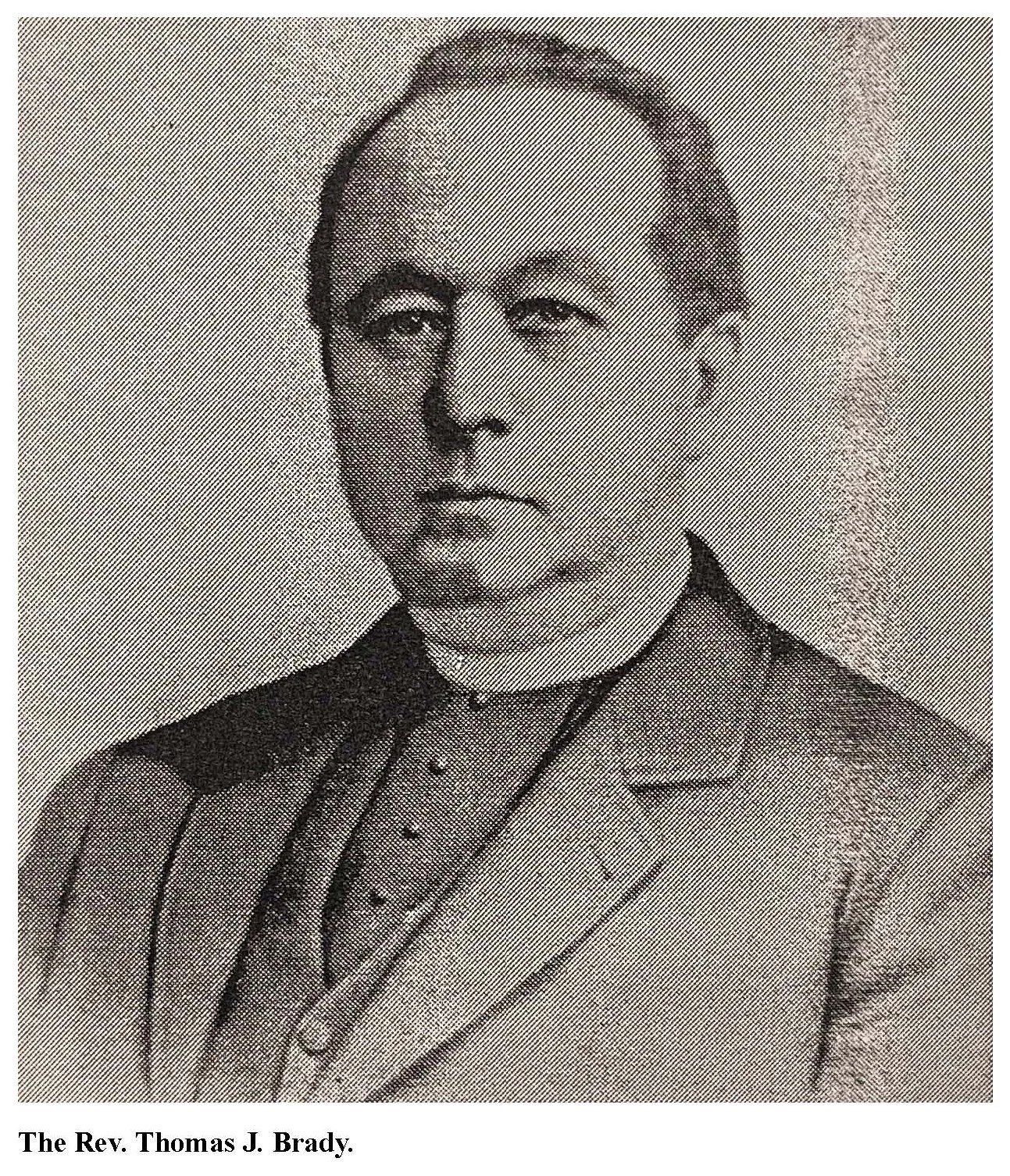
Perhaps no other person has had a more profound and lasting effect on Catholicism in Portsmouth than the Rev. Thomas J. Brady.
His works remain visible in 2026: The current St. Paul’s Catholic Church downtown. All-Saints Cemetery, aka Portsmouth Catholic Cemetery, on Elm Avenue. And Portsmouth Catholic Regional School, the descendant of Father Brady’s determined efforts to build parochial schools here.
Brady was born June 5, 1843, in County Cavan, Ireland. He was educated at All Hallows College in Dublin. The college was founded in 1842 to train Irish priests for missionary work in the English-speaking world.
Brady came to the United States after his ordination and served three years as an assistant pastor at the Cathedral of the Sacred Heart in Richmond. During that time, he also was secretary to Bishop John McGill.
He was 27 when he was sent by McGill to Portsmouth to serve as pastor of St. Paul’s, the second-oldest parish in Virginia. His tenure began Oct. 9, 1870.
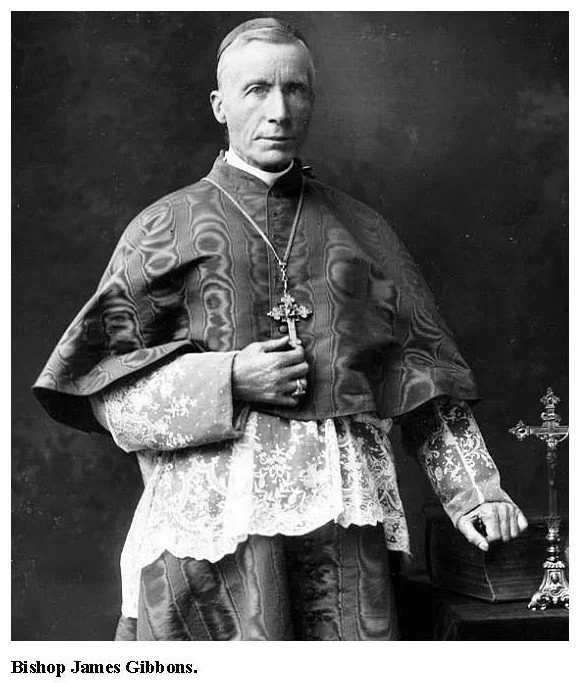
Two years later, McGill was replaced by Bishop James Gibbons, who would have a profound influence on Brady’s pastorate.
As bishop, Gibbons made a priority of building Catholic schools across the diocese. He saw parochial schools as a way for immigrant children to be integrated into American life and academically prepared to be patriotic and productive citizens.
With those thoughts in mind, in 1876 Gibbons bought a parcel at Dinwiddie and King streets in downtown Portsmouth for $2,000. (That’s the equivalent of $62,250 in 2026 dollars.)
Brady obtained a $3,000 loan ($93,300 equivalent) from a Baltimore bank to help finance construction. A contract for $4,550 ($141,500 equivalent) was awarded to Robert Cutherell to build a school. The three-story building also would include space for a convent.
Cutherell’s company worked quickly and delivered a brick building that would serve as a school for the next 40 years.
NEXT: Classes begin at St. Joseph’s Female Academy.
SOURCES:
“A Story of Faith / 1804-2000 / St. Paul’s Catholic Church / Portsmouth, Virginia”
“Catholic Education in Portsmouth, Virginia / 1844-2007,” by Mary Sue Morlino O’Brien
-
BY BRICE ANDERSON
Class of 1976
The misleadingly named St. Joseph’s Female Academy opened on Wednesday, Sept. 27, 1876. A faculty of four nuns welcomed 35 students – mostly girls but also a “few” young boys.
The school’s mission was guided by a simple principle provided by the Rev. Thomas J. Brady, pastor of St. Paul’s Catholic Church: “Save the child, and the man will take care of himself.”
Classes were segregated by gender. The girls were educated in the new, three-story brick building at 608 Dinwiddie St.
The younger boys were taught in a neighboring house, and older boys were taught about a block away, in St. Patrick’s Hall parish house on the site of what would become the Hotel Governor Dinwiddie.
Catholic education in Portsmouth had existed per se since 1844, in makeshift form at five locations in the city. We celebrate the 150th anniversary of Catholic SCHOOLS this year, as St. Joseph’s was the first school to be built, from the ground up, for parochial education.
The first nuns at St. Joseph’s, from the Emmitsburg, Md.-based Sisters of Charity, were Sister Gertrude Howe, a native of England and the school’s first superioress; Sister Mary Josephine Donovan, age 18, from New Orleans; Sister Isodore Minton, 28, a native of Ireland; and Sister Caroline Meredith, 21, from Lancaster County in Virginia.
The Norfolk Virginian newspaper reported on Sept. 30, in the flowery style of the day, the following: “St. Joseph’s Female Academy – This handsome edifice has been completed, and the Sisters of Charity, under whose auspices the school is to be conducted, have taken it in charge. Nothing has been neglected in the construction of the building that could contribute to the comfort of both teacher and scholar, and the institution, we have no doubt, will be in everyway a great success.”
Students were organized in three groupings: primary, intermediate and senior, in grades 1 through 9. The school operated on a 10-month calendar with summer break in July and August.
Classes began at 9 a.m. and ended at 3 p.m. Lunchtime was a full hour.
In a thesis on the work of the Sisters of Charity in Virginia in the 1800s, its author noted that “Since the students attending the school were in comfortable financial circumstances, a tuition fee ranging from $1.50 to $3 per month was paid.” (In 2026 dollars, that’s the equivalent of $46.68 and $93.37.)
Over time, the curriculum became astonishingly robust.
Elementary courses included:
religion, arithmetic, reading, writing, geography, calisthenics, Bible history, grammar, spelling, history, sewing, and singing.
Older students were instructed in:
algebra, mental and practical arithmetic, geometry, trigonometry, familiar science, chemistry, physiology, astronomy, botany, physical geometry, history, grammar, literature, etymology, rhetoric, philosophy, religion, elocution, sewing and embroidery, and singing.
Enrollment grew quickly in the early years and reached 150 in 1879. The nuns’ community room in the convent section of the building had to double as classroom space.
By 1886, a free-standing convent was built for the five nuns who now comprised the faculty, and the convent section of the main building was converted into full-time classroom space.
A 10-member committee was appointed by Father Brady to raise $4,000 (equivalent to $141,700 in 2026) for the new convent. A benefit picnic attracted an estimated 1,300 people on July 7, 1886, and raised $650 in one day.
In 1897, a kindergarten program for children ages 4 to 6 was added.
By the time of St. Joseph’s 40th anniversary, the school long since had outgrown its original building.
NEXT: The new St. Joseph’s Academy
SOURCES:
“A Story of Faith / 1804-2000 / St. Paul’s Catholic Church / Portsmouth, Virginia”
“Catholic Education in Portsmouth, Virginia / 1844-2007,” by Mary Sue Morlino O’Brien
“The Nineteenth Century Educational Contributions of the Sisters of Charity of St. Vincent de Paul in Virginia,” by Sister Mary Agnes Yeakel
-
BY BRICE ANDERSON
Class of 1976
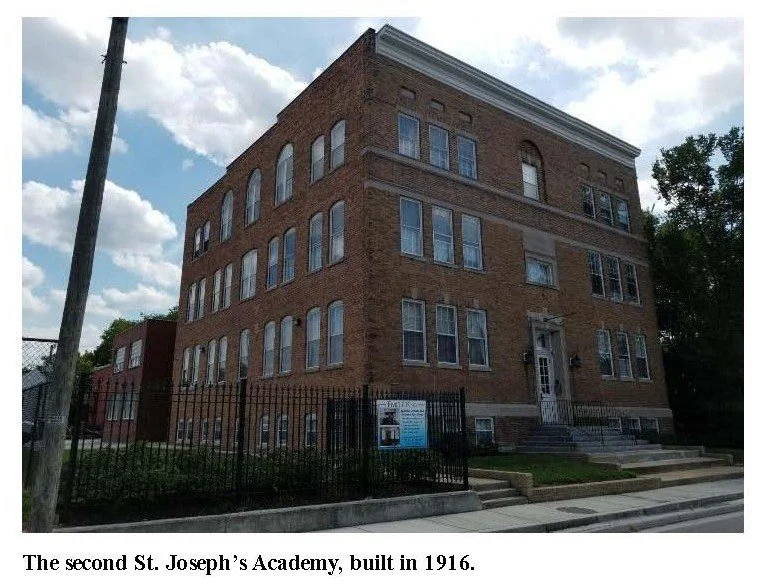
After 40 years in the same building, St. Joseph’s Academy was ready for a new home.
In 1910, the Rev. Charles E. Donahoe, pastor of St. Paul’s Catholic Church, foresaw the need for a larger building for the girls’ school. Money from the estate of the Rev. Thomas J. Brady, Donahoe’s predecessor, was used in part to buy an adjoining lot that faced King Street.
Six years later, with the school’s enrollment at 250, it was time to build. (By then, combined with the enrollment in the nearby boys’ school, St. Paul’s Boys Academy, about 600 students were attending parochial schools in the city.)
The new, three-story brick school would face King Street. It included seven classrooms, a library and an auditorium.
The Sept. 6, 1916, edition of The Portsmouth Star reported the following: “The existence of St. Joseph’s Academy for 40 years and of St. Paul’s for 25 is but one of many things which attest the popularity of parochial schools in the city. The steady increase in enrollment reached its climax last year, when the combined number of students in attendance at the two academies was nearly 600. This has demanded additions to the teaching staffs, and has moreover necessitated the erection of a new St. Joseph’s Academy, a magnificent building modern in every particular.”
But the building boomlet wasn’t done yet.
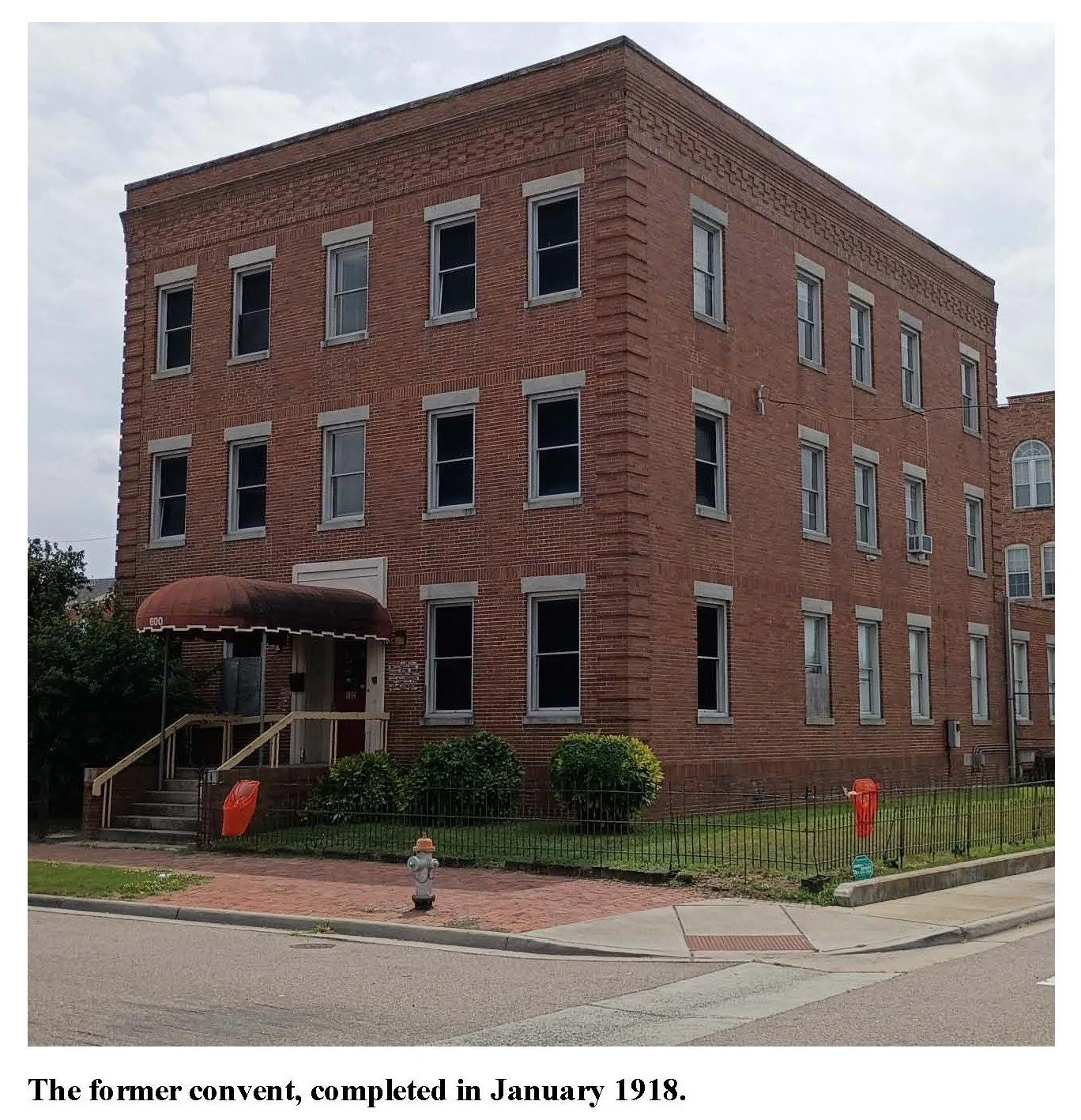
The next year, beginning in May, construction began on a new brick convent to replace the convent built 31 years earlier. The project was completed in January 1918 at a cost of $17,000 ($442,300 equivalent in 2026). By 1952, the convent would be home to 17 nuns.
Those two buildings would serve the Catholic school community in Portsmouth for the next 52 years, until the 1970 consolidation of St. Paul’s Elementary School, Holy Angels School and the School of the Little Flower.
Today, the convent sits vacant. The adjacent school building houses 20 units in what its website describes as “the premier apartment building in Portsmouth.”
NEXT: Father’s Brady’s enduring legacy in Portsmouth.
SOURCES:
“A Story of Faith / 1804-2000 / St. Paul’s Catholic Church / Portsmouth, Virginia”
“Catholic Education in Portsmouth, Virginia / 1844-2007,” by Mary Sue Morlino O’Brien
“The Nineteenth Century Educational Contributions of the Sisters of Charity of St. Vincent de Paul in Virginia,” by Sister Mary Agnes Yeakel
-
EDITOR’S NOTE: We’ve tried our best, but we have not been able to determine with any certainty the year that St. Paul’s Boys Academy opened. The cornerstone says 1891, but most historical references we’ve found indicate the school opened in 1892. The records of the Xaverian Brothers order, which comprised the faculty at the school’s beginning, says that tenure began in 1892. Unfortunately, no contemporaneous newspaper coverage of the school’s opening day has been found. So, for the purposes of this history project, we’re using 1892.
BY BRICE ANDERSON
Class of 1976
The Rev. Thomas J. Brady came to Portsmouth to do big things. Some of those things were part of a grand strategy. At least one was a response to tragedy.
When the Irish-born and -educated priest arrived in October 1870 at St. Paul’s Catholic Church, he inherited a parish facing financial challenges. The church had been rebuilt after a fire in 1859, and $5,000 of debt (the equivalent of $127,000 in 2026) remained. Money raised through several social events, plus an appeal to parishioners, eventually paid off the note.
Brady then looked west, to Suffolk, where he would begin a mission that eventually would result in a new parish.
He traveled by train from downtown Portsmouth to downtown Suffolk, where once a month he would say Mass and administer the sacraments in the farm home of parishioner Elfrida Holland Lewis. She was the daughter of Katherine Woodley Holland, the first Catholic to settle in Suffolk.
For decades, at the farm and at two successive residences, Mrs. Holland opened her home for Mass. Her daughter, Katherine Lewis Crowder, wrote in her diary that confession would be heard in one room with a priest seated on a chair and the penitent kneeling at his side. Mass was celebrated in the living room, with a bureau draped with white cloths serving as the altar.
The first Catholic baptism in Suffolk was conducted by Brady in the Lewis home in 1902.
Brady and his assistant pastor, the Rev. William B. Hanley, would continue this mission for 25 years. The mission eventually led to an independent parish, St. Mary of the Presentation, in November 1909.
In 1880, Father Brady purchased 6 acres at the corner of Elm Avenue and Gosport Road – the future Portsmouth Boulevard – for a Catholic cemetery. Another purchase three years later expanded the cemetery to 14 acres. Brady borrowed the money to buy the properties with the confidence that “the cemetery ought to pay for itself.”
Today, we know that 14-acre tract as All Saints Catholic Cemetery. It is the resting place of more than 1,600 people.
But perhaps Brady’s greatest legacy, which would benefit children for the next 150 years, began in 1876 with the purchase by the diocese of a 113-by-880-foot lot at Dinwiddie and King streets in downtown Portsmouth.
Portsmouth’s first diocesan school, St. Joseph’s Female Academy, opened in September 1876. Enrollment grew quickly, and by the late 1870s Brady began plans for a separate academy for boys. Before then, boys were taught in makeshift facilities nearby.
A boys academy remained a dream for most of a decade until a parishioner, Eliza Burke Gregory, bequeathed $10,000 for the school “under the control and management of persons of the Catholic faith but shall be open to scholars of all denominations upon application.”
Brady purchased a lot at Washington and London streets – coincidentally of the same 113-by-880-foot dimensions as the original St. Joseph’s Academy property – and in September 1892, St. Paul’s Boys Academy opened with an enrollment of 60.
The faculty was composed of three Xaverian Brothers: Vincent, the superior; Justin; and Christopher.
St. Paul’s Academy would operate as a boys school for the next four decades. Catholic education would continue uninterrupted in that building for almost 100 years.
By 1897, Father Brady’s legacy seemed assured. In his 27 years in Portsmouth, he had put his parish on sound financial footing; established a thriving mission in Suffolk that eventually would become its own parish; built two schools, a convent and a rectory; and established a church-operated cemetery.
But on the night of March 29 fire destroyed St. Paul’s Catholic Church, after flaming debris from a nearby structural fire blew onto the roof of the sanctuary.
Brady recorded the event in his diary: “The church caught (fire) from sparks carried by a strong northwestern wind from Whitehurst Hall near the corner of Green and Glasgow, more than two squares away. The high breeze blowing 40 miles an hour lodged bushels of sparks, some being whole shingles, in valleys, which melted the zinc communicating with the sheathing, and the fire commenced over the organ gallery and northwest corner about same time running, between ceiling and slates, reducing the sacred edifice to a heap of ruins.”
Within 90 minutes, the church was destroyed.
An entry in “The Fireman’s Red Book” provided additional details: “On the night of March 28, 1897 with a terrific wind blowing, fire raged for five hours, destroying 35 houses, including St. Paul’s Catholic Church. Over 300 people were made homeless. For a time it looked as if the fire might sweep the entire city, but owing to the brave work of the Fire Department, the flames were subdued. Great assistance was rendered by the Navy Yard and County Fire Departments. Four men were arrested and sentenced to the penitentiary for causing the fire. The loss amounted to $85,000.”
Brady responded with a tried-and-true formula: He appointed a 19-member committee to raise money to rebuild. The initial goal was $20,000, but more than $70,000 was raised within a year. (That’s the equivalent of about $2.8 million in 2026 dollars.)
But that was only a start. The cost of rebuilding was placed at $100,000. More money would be needed to furnish the building. Additional money was borrowed, and the women of the church held a series of social events, picnics and bazaars to repay the debt.
The rebuild would be a lengthy process.
Ground was broken for the fifth St. Paul’s on Feb. 2, 1898. On April 15, the cornerstone was laid by Bishop Augustine Van de Vyver as a crowd of 2,000 people gathered.
The new St. Paul’s would be larger and grander than its predecessors, and work on the exterior would take seven years. Bishop Van de Vyver dedicated the new church on Nov. 12, 1905.
Final work on the interior took several more years. Each of the church’s 28 stained-glass windows was financed by a parishioner, as were 14 carved-wood Stations of the Cross. One of the finishing touches, the murals above the altar, were completed in 1928.
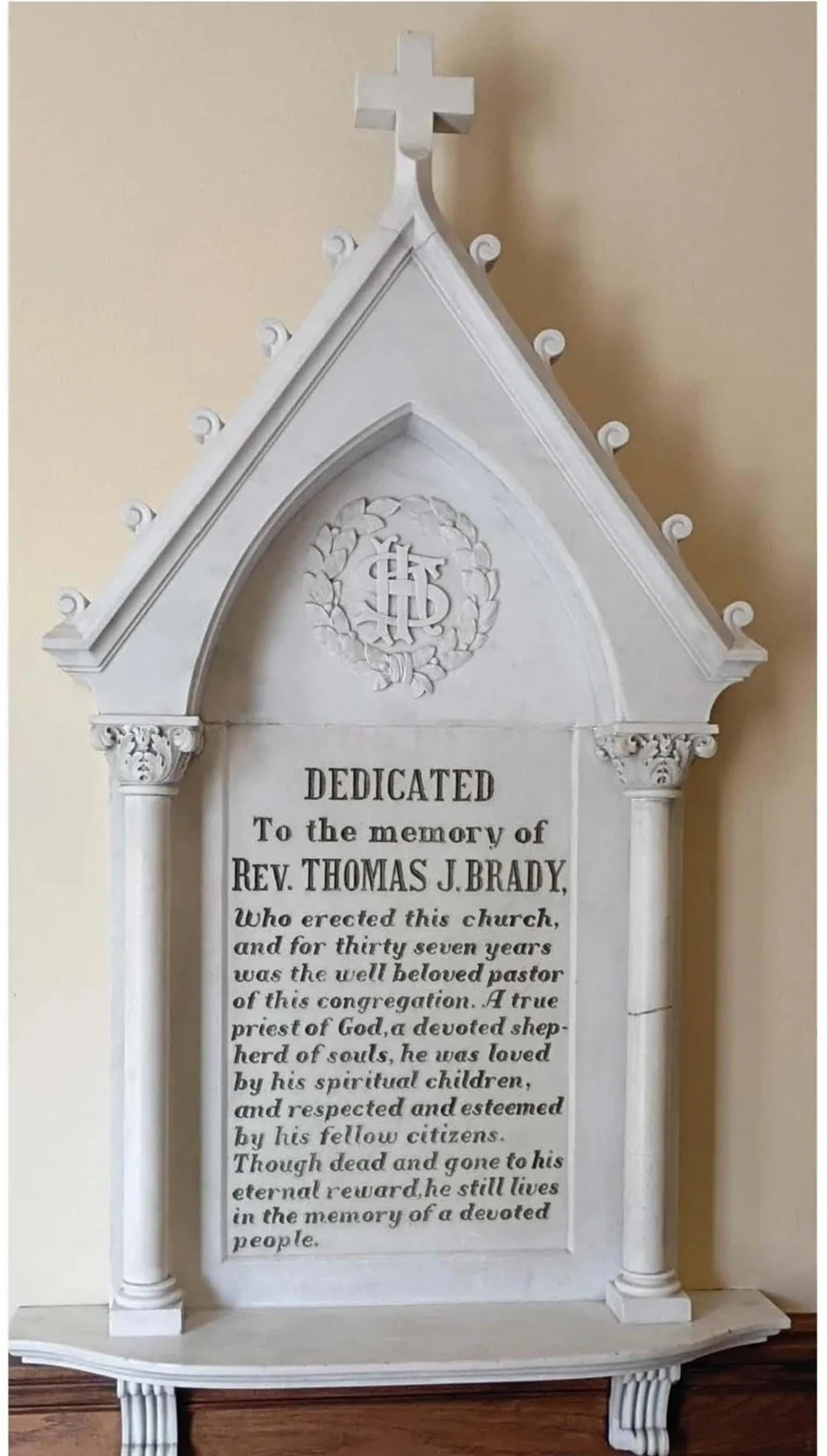
Father Brady, who oversaw the rebuild from its infancy, never would see the finished product. In his 37th year as pastor, he suffered a stroke on Oct. 25, 1907. He died eight days later, on Nov. 2, at age 64.
His funeral Mass was described as one of the largest ever in Portsmouth. The Rev. Felix Kaup, who had been an assistant pastor under Brady, said in a eulogy published in The Portsmouth Star that “the history of the past 37 years has shown him to be a boon to his fellow citizens, a pattern to his flock, and a credit to the Catholic clergy in Virginia.”
Brady is buried in the priests’ section, along with Father Hanley, in the cemetery he established for his congregation.
SOURCES:
“A Story of Faith / 1804-2000 / St. Paul’s Catholic Church / Portsmouth, Virginia”
“Catholic Education in Portsmouth, Virginia / 1844-2007,” by Mary Sue Morlino O’Brien
“The Nineteenth Century Educational Contributions of the Sisters of Charity of St. Vincent de Paul in Virginia,” by Sister Mary Agnes Yeakel
“Shine Like Stars / The Catholic Diocese of Richmond / 200th Anniversary / 1820-2020”
“The Fireman’s Red Book
NEXT: The start of Catholic education in Portsmouth preceded St. Joseph’s Female Academy by 32 years.
-
BY BRICE ANDERSON
Class of 1976
Catholic education in Portsmouth, but not necessarily brick-and-mortar Catholic schools, can be traced to a time 32 years before the construction of St. Joseph’s Female Academy.
The Rev. Francis Devlin – 30 years old, a native of Langford, Ireland, and newly ordained – arrived in Portsmouth in 1844 to serve as the fifth pastor of St. Paul’s Catholic Church.
He had been educated at the short-lived St. Vincent’s Seminary and College near Richmond. The seminary was begun by Bishop Richard Vincent Whelan in 1841 but was shuttered just five years later.
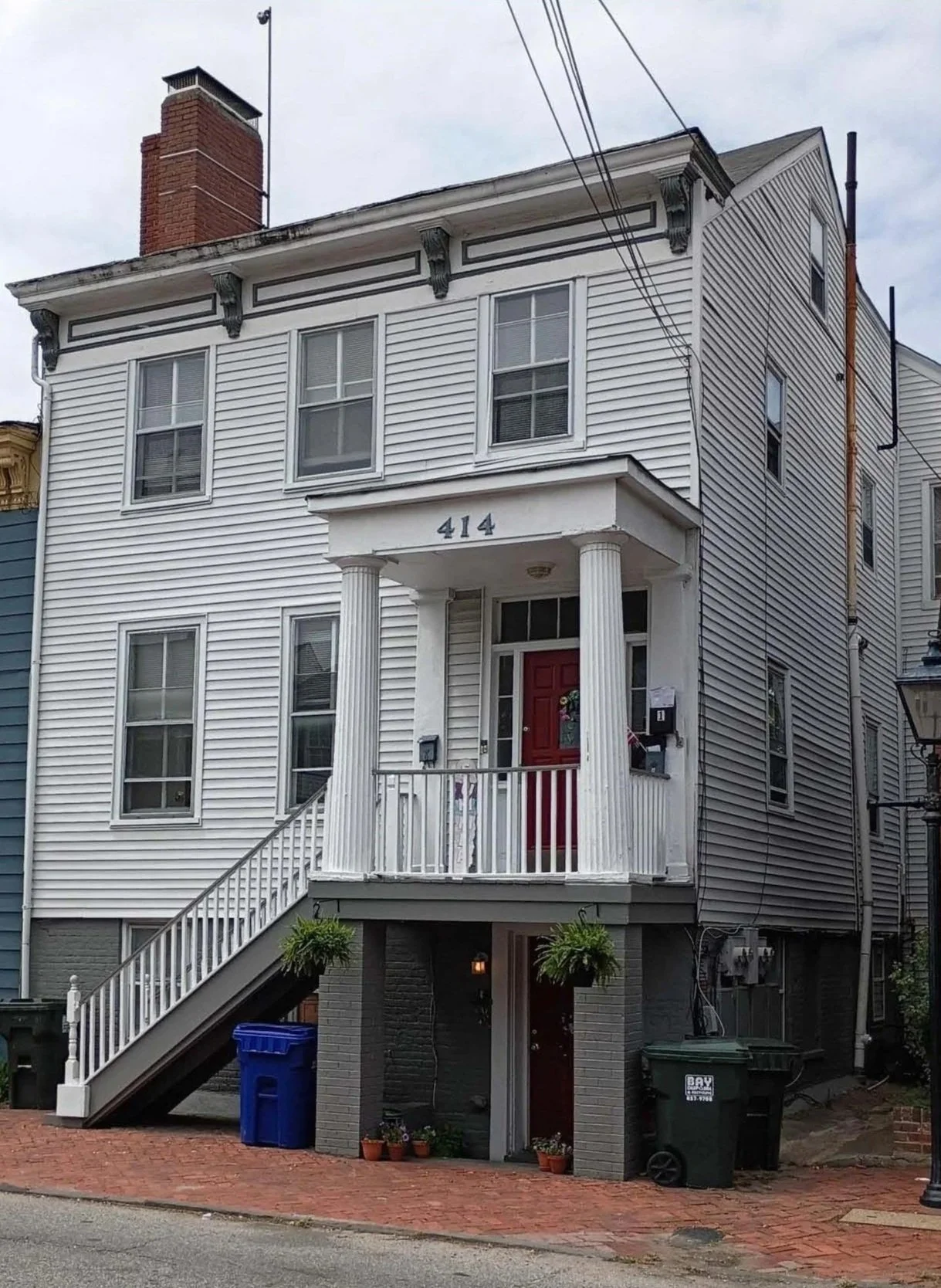
Father Devlin lived in the home at 414 London St. in downtown Portsmouth, a short walk from the church. The home, built in 1840, still stands today and has been divided into apartments.
Devlin used the basement of the home to teach children. In her book “Catholic Education in Portsmouth, Virginia / 1844-2007,” author Mary Sue Morlino O’Brien said “This happens to be the first organized Catholic education in Portsmouth. What was taught and for how long is not known.”
Devlin’s successor as pastor, the Rev. Joseph H. Plunkett – another Irish priest trained at the Richmond-area seminary – accelerated the education effort after he arrived in Portsmouth in 1855.
The Norfolk Virginian newspaper published the following in 1867: “Under the immediate charge of the Rev. Father Plunkett, there are now in successful operation five schools for the education of the Catholic children of our community. This speaks volumes of praise for the untiring energy of the Rev. Father in his endeavors to foster and cultivate a liberal system of education among the young who are under his care and guidance. Few denominations can boast of the unlimited advantages as are here presented, and the full attendance at these schools show that the efforts of Fr. Plunkett are appreciated by the flock. The following is a list of the schools and teachers who have charge of the same: Mr. Walsh’s 52 pupils; Miss Larkin, 35 pupils; Miss H. Conley, 40 pupils; Miss Gallilee, 40 pupils; Miss Chicken, 40 pupils. Total, 207.”
By 1875, on the eve of construction of Portsmouth’s first from-the-ground-up Catholic school, William A. Walsh wrote in “Annals of the Catholic Church of Portsmouth, Virginia, from 1804 to 1875” that Sunday school lessons were taught “under the personal care of the Pastor, assisted by a superintendent, a number of young ladies of the congregation, and a committee of young men selected from St. Joseph’s Benevolent Society, attached to the church.”
Younger boys and girls attended a school “held in the sacristy of the church, under the care of a Catholic lady,” Walsh wrote.
Older Catholic girls attended one of two private schools in the city “under the direction of competent Catholic teachers, where the catechism is taught daily, but not being under the control of the pastor.”
(One of these private schools, Mrs. Gregory’s Female Academy, was owned by St. Paul’s parishioner Eliza Burke Gregory, whose $10,000 bequest in 1888 would result in the construction of the city’s second from-the-ground-up Catholic school, St. Paul’s Boys Academy.)
Walsh described the threadbare operation of the boys’ school under Father Thomas J. Brady, in St. Patrick’s Hall parish house on the site of what eventually would become the Hotel Governor Dinwiddie, this way:
“The male parochial school is under the immediate care of the Pastor, who spends several hours each day, assisted by an experienced teacher, in hearing the recitations of the scholars, and giving them catechetical instructions on the sacraments, doctrines of the church, etc. The present attendance is about 65. … The scholars make a small monthly payment, but for the last two years, this is inadequate to pay the teacher and Fr. Brady has to make up the deficiency. This in addition to his daily labor in the school presses heavily upon him, and must necessitate a great change, unless the congregation will do, what they have not yet done, help to defray the expenses of the free scholars, who amount to nearly one-third of the daily attendance; and are furnished with school requisites without charge. The school room is large, well lighted and ventilated, but inadequately supplied with school furniture; but the great deficiency lies in the want of books, maps, etc., which a large portion of the parents are unable to purchase; this increases the labor of teachers, as they are compelled to use whatever books the scholars are able to procure, instead of the improved Catholic books now generally used. This state of affairs is disheartening to scholars and teachers, and unless speedily remedied, will have a disastrous effect upon the Catholic male school in Portsmouth.”
Walsh’s description was written at the end of a trying 20-year period for Portsmouth in general and the city’s Catholic community in particular.
In the summer of 1855, a yellow fever epidemic devastated the populations of Portsmouth and Norfolk. About 3,000 people died in Norfolk, out of a population of 16,000; and about 1,000 people died in Portsmouth, out of a population of 10,000.
Yellow fever was brought to Hampton Roads when the steam-powered cargo ship Benjamin Franklin docked in June in Gosport Shipyard in Portsmouth for repairs.
The ship was carrying cargo and passengers from St. Thomas Island in the Caribbean and ultimately was bound for New York City. The virus spread from the ship into the community from Aedes aegypti mosquitoes and infected crew members.
Yellow fever symptoms range from mild flulike aches to liver damage.
About 15 percent of victims develop severe symptoms, including high fever; jaundice, causing a yellowing of the skin and eyes; abdominal pain; and bleeding from the nose, mouth, eyes or stomach. About half of victims in this condition would die within seven to 10 days.
An estimated 75 percent of the populations of Norfolk and Portsmouth – those with the means and a place to go – evacuated the cities. The cities’ governments and health care systems collapsed.
Father Devlin, the St. Paul’s pastor, ministered to the stricken, including to immigrants on “Irish Row” on First Street adjacent to what now is known as Norfolk Naval Shipyard. Devlin himself became infected and died Oct. 7, 1855. He was buried under the altar at St. Paul’s.
Devlin was succeeded as pastor by Father Plunkett. During his pastorate, in 1859, the church was destroyed by fire. A report in “The Fireman’s Red Book” blamed arson: “(T)his was of incendiary origin, and so determined were the culprits to accomplish their purpose that the hose was cut twice during the fire.”
Plans for rebuilding began immediately, but the outbreak of the Civil War in 1861 delayed the start of construction.
During the war, when Norfolk and Portsmouth were occupied by Union forces, Plunkett served as chaplain to the federal army. When the war ended, some of the Union soldiers offered to stay and help with rebuilding his church.
The fourth St. Paul’s finally was completed in 1868, three years after the war ended.
SOURCES:
“A Story of Faith / 1804-2000 / St. Paul’s Catholic Church / Portsmouth, Virginia”
“Catholic Education in Portsmouth, Virginia / 1844-2007,” by Mary Sue Morlino O’Brien
“Annals of the Catholic Church of Portsmouth, Virginia, from 1804 to 1875,” by William A. Walsh
“The Fireman’s Red Book”
-
EDITOR’S NOTE: We’ve tried our best, but we have not been able to determine with any certainty the year that St. Paul’s Boys Academy opened. The cornerstone says 1891, but most historical references we’ve found indicate the school opened in 1892. Records of the Xaverian Brothers order, which comprised the faculty at the school’s beginning, say that tenure began in 1892. Unfortunately, no contemporaneous newspaper coverage of the school’s opening day has been found. So, for the purposes of this history project, we’re using 1892.
BY BRICE ANDERSONClass of 1976
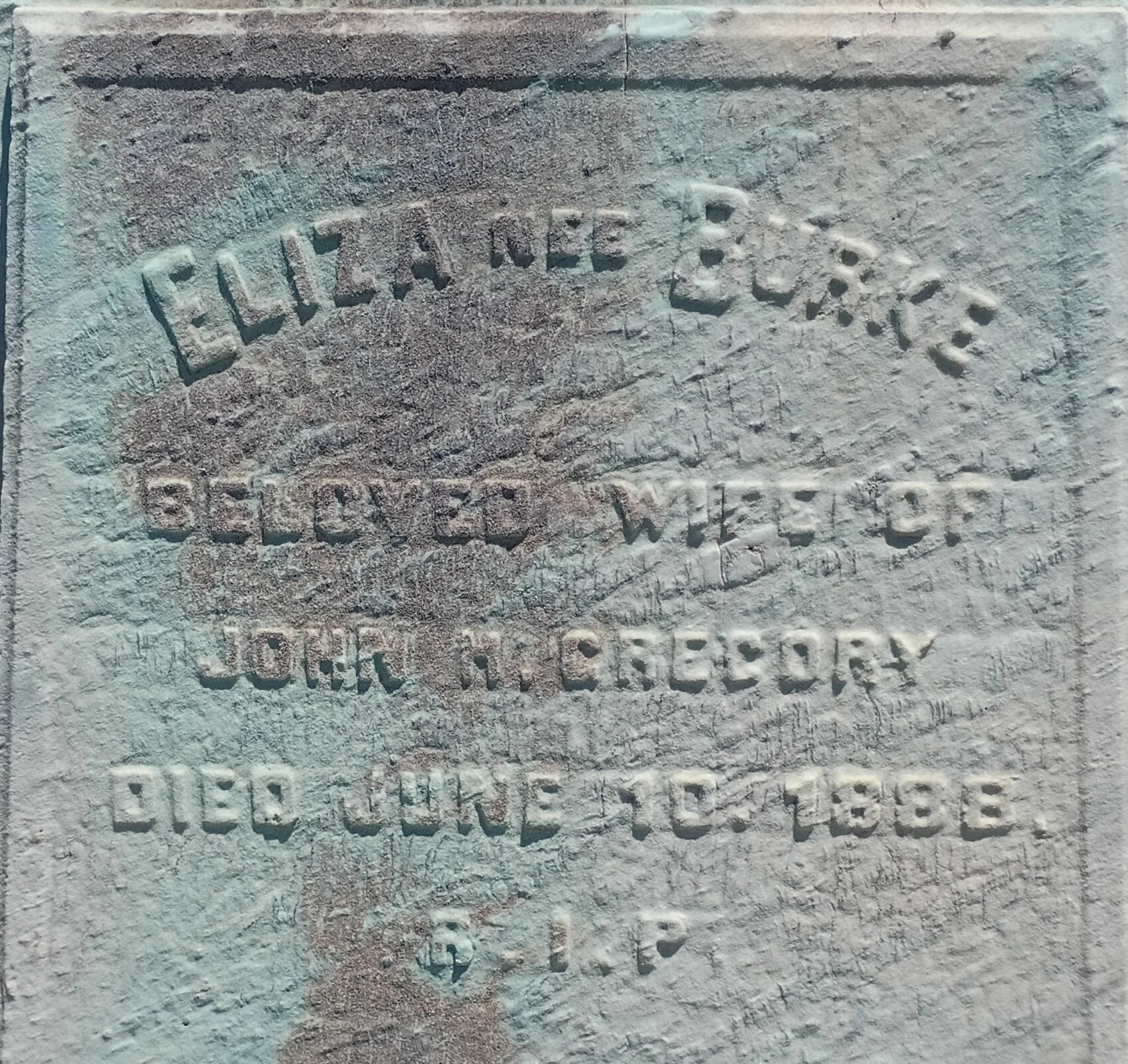
A lasting monument å stands as testament to the generosity and farsightedness of Eliza Burke Gregory.
Gregory, a lifelong parishioner of St. Paul’s Catholic Church in Portsmouth, devoted a great part of her adult life to the education of children in her native city.
In death, she guaranteed that her belief in this cause would continue into the 21st century.
Gregory was the daughter of an Irish immigrant father, John Burke, who operated a grocery store and worked as a stonecutter. She was educated at the motherhouse of the Sisters of Charity, St. Joseph’s Academy, in Emmitsburg, Md.
After she returned to Portsmouth, she worked as a music teacher. She later owned and operated Mrs. Gregory’s Female Academy, a private school in Portsmouth.
She married John H. Gregory, a transplanted New Yorker who owned and operated The New York Store on Crawford Place. The store specialized in silks, damasks, linens and other fine fabrics.
The Gregorys would have one child, John Jr. The three-generation household – patriarch John Burke, his daughter and her husband, and their son – lived at 81 High St.
John Jr. would die at age 15, on Jan. 18, 1864. His father died the next year, on Oct. 29, at the age of 43.
After the deaths of her son and husband, Gregory continued to operate her school. A newspaper article in 1868 described her academy as a “flourishing and popular seminary of learning.” She was described as “an accomplished preceptess, earnest and devoted in her high calling, and is very well known to almost everyone. … She possesses large experience in teaching the young of this community.”
Her father, John, who was born when life expectancy was under 40, was 87 when he died Nov. 29, 1878.
His death left Eliza with no living relatives. Two years later, she decided to move to St. Vincent de Paul Hospital in Norfolk, where she lived under the care of the Sisters of Charity.
Her obituary stated that “in her declining years, being delivered by the hand of death of all of her relations, she became like a stranger in a new city. In her loneliness and despondency, she sought aid in her Holy Religion. Well did it fill the gap caused by the severance of every human bond. St. Vincent’s Hospital became her new home, and there under the nestling of the Sisters of Charity, she learned meek resignation.”
In a 2006 interview with The Virginian-Pilot, Mary Sue Morlino O’Brien, author of “Catholic Education in Portsmouth, Virginia / 1844-2007,” said Gregory “was a very pious person and an educated person and a spiritual person. I think she just was a good example.”
Those traits carried over after her death.
In her will, Gregory left $10,000 – the equivalent of about $351,000 in 2026 dollars – to St. Vincent’s Hospital.
She bequeathed the same amount to her church in Portsmouth, for the establishment of a boys academy to compliment the girls academy, St. Joseph’s, which opened in 1876.
St. Paul’s Boys Academy, with 60 students and a faculty of three Xaverian Brothers, opened in 1892. Catholic students would be educated at that site, in that building, uninterrupted for 100 years.
Over the decades, the campus at Washington and London streets was expanded piece by piece, through acquisition and construction, and eventually became Portsmouth Catholic High School.
Gregory’s gift, and her foresight, had established the second pillar in the development of Catholic schools in Portsmouth and put the boys on equal footing – at least as far as facilities were concerned – with the girls. Her legacy continues in 2026, as the successor to St. Paul’s thrives as Portsmouth Catholic Regional School.
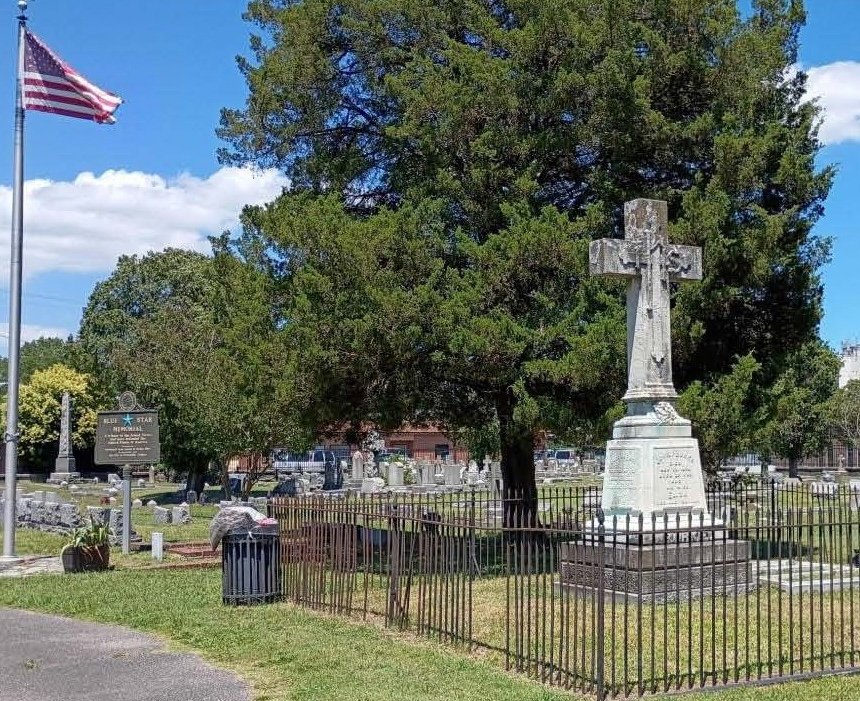
Eliza Burke Gregory is buried in a gated plot, with her parents, her husband and her son, at Cedar Grove Cemetery in Portsmouth.
SOURCES:
** “A Story of Faith / 1804-2000 / St. Paul’s Catholic Church / Portsmouth, Virginia”
** “Catholic Education in Portsmouth, Virginia / 1844-2007,” by Mary Sue Morlino O’Brien
** The Virginian-Pilot
-
(First in a series of three)
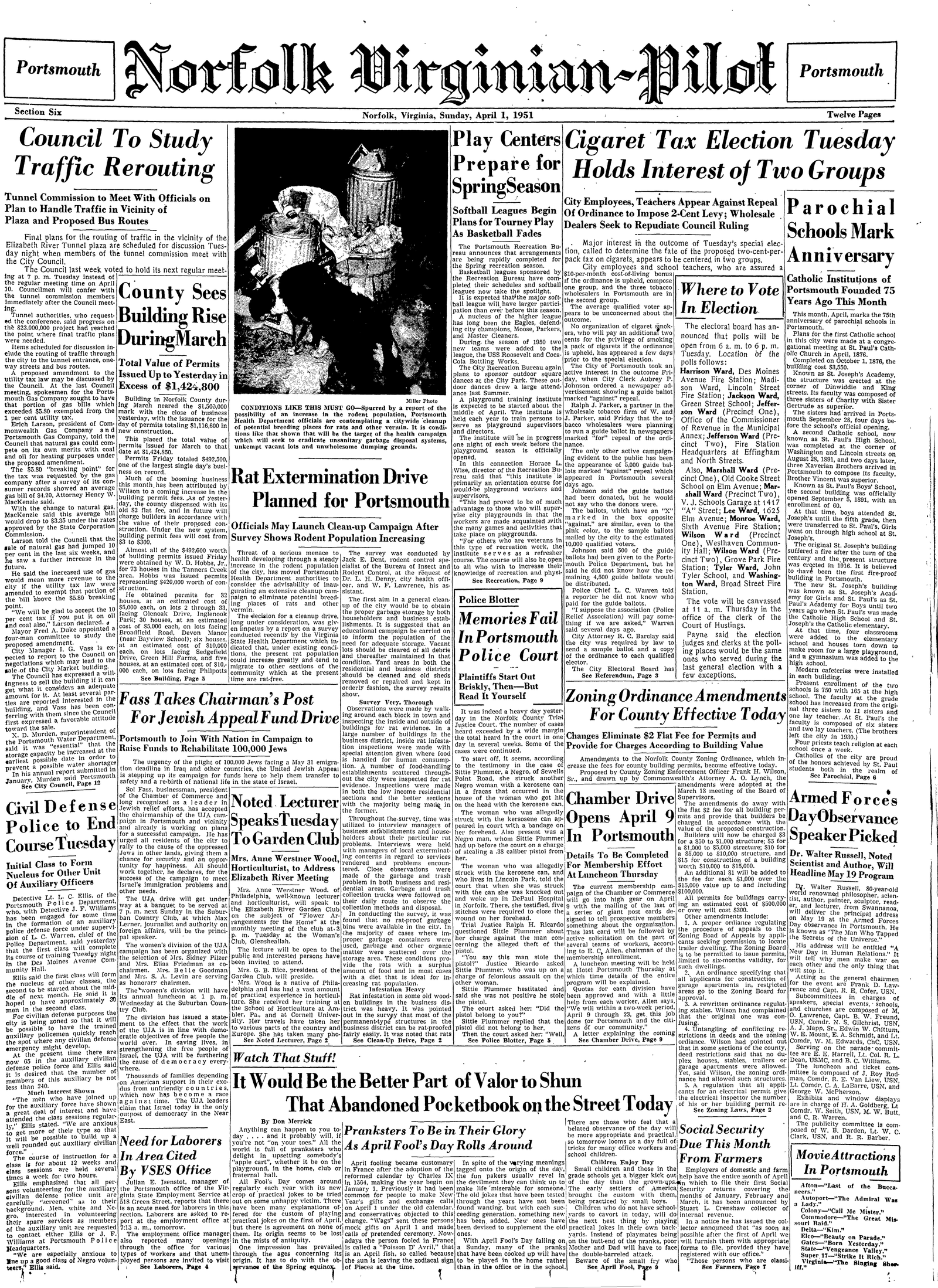
EDITOR’S NOTE: The following is a story from the April 1, 1951, editions of the Norfolk Virginian-Pilot that reported on the 75th anniversary of Catholic schools in Portsmouth.
What you will read below attempts to be a faithful re-creation of the original story, with any typographical errors, inconsistent punctuation and inconsistent elements of style. (See if you can identify the 41-word sentence with nary a comma.)
Two errors of fact are noted: The story states that the original St. Joseph’s Female Academy was built in 1876 for $3,550. Research indicates the cost was $4,550. Also, the original story misidentified the location of St. Paul’s Boys Academy as being Washington and Lincoln streets. In this case, “Lincoln” should have been “London.”
This month, April, marks the 75th anniversary of parochial schools in Portsmouth.
Plans for the first Catholic school in this city were made at a congregational meeting at St. Paul’s Catholic Church in April, 1876.
Completed on Oct. 1, 1876, the building cost $3,550.
Known as St. Joseph’s Academy, the structure was erected at the corner of Dinwiddie and King streets. Its faculty was composed of three sisters of Charity with Sister Gertrude as superior.
The sisters had arrived in Portsmouth September 28, four days before the school’s official opening.
A second Catholic school, now known as St. Paul’s High School, was completed at the corner of Washington and Lincoln streets on August 28, 1891, and two days later, three Xaverian Brothers arrived in Portsmouth to compose its faculty. Brother Vincent was superior.
Known as St. Paul’s Boys’ School, the second building was officially opened September 5, 1891, with an enrollment of 60.
At that time, the boys attended St. Joseph’s until the fifth grade, then were transferred to St. Paul’s. Girls went on through high school at St. Joseph’s.
The original St. Joseph’s building suffered a fire after the turn of the century and the present structure was erected in 1916. It is believed to have been the first fire-proof building in Portsmouth.
The new St. Joseph’s building was known as St. Joseph’s Academy for Girls and St. Paul’s as St. Paul’s Academy for Boys until two years ago when St. Paul’s was made the Catholic High School and St. Joseph’s the Catholic elementary.
At that time, four classrooms were added to the elementary school and houses torn down to make room for a large playground, and a gym was added to the high school.
Modern cafeterias were installed in each building.
Present enrollment of the two schools is 750 with 165 at the high school. The faculty at the grade school has increased from the original three sisters to 11 sisters and one lay teacher. At St. Paul’s the faculty is composed of six sisters and two lay teachers. (The brothers left the city in 1930.)
Four priests teach religion at each school once a week.
Catholics of the city are proud of the honors achieved by St. Paul students both in the realm of scholastics and in athletics.
In the last three years, three St. Paul’s students have won scholarships.
Last year, Tommy Brockwell won a scholarship to Catholic University and Fay Francisco won a VFW scholarship. The previous year, Virginia Griffin won the VFW honor.
Athletic teams were originated at St. Paul’s while the brothers were still there. Brother Clarence, who revisited the city last year, was largely responsible for the introduction of competitive sports.
It has been only during the last two years, however, that the institution has had paid coaches.
Outstanding competitive sport is basketball. St. Paul’s girls have twice walked off with the State championship for Catholic schools and St. Paul’s boys have copped the crown once.
Latest step forward for the Catholic schools is uniforms for the student band. Financed largely through the highly active St. Paul’s Parent-Teacher Association, the uniforms are of blue and white, the school colors, and consist of an Eisenhower jacket, stripped trousers and blue hat with white insignia.
Plans are now afoot, according to Charles Cigler, hard-working bandmaster, to have four baton twirlers with the band next Fall and for the group to make formations on the playing field at halftime.
-
(Second in a series of three)
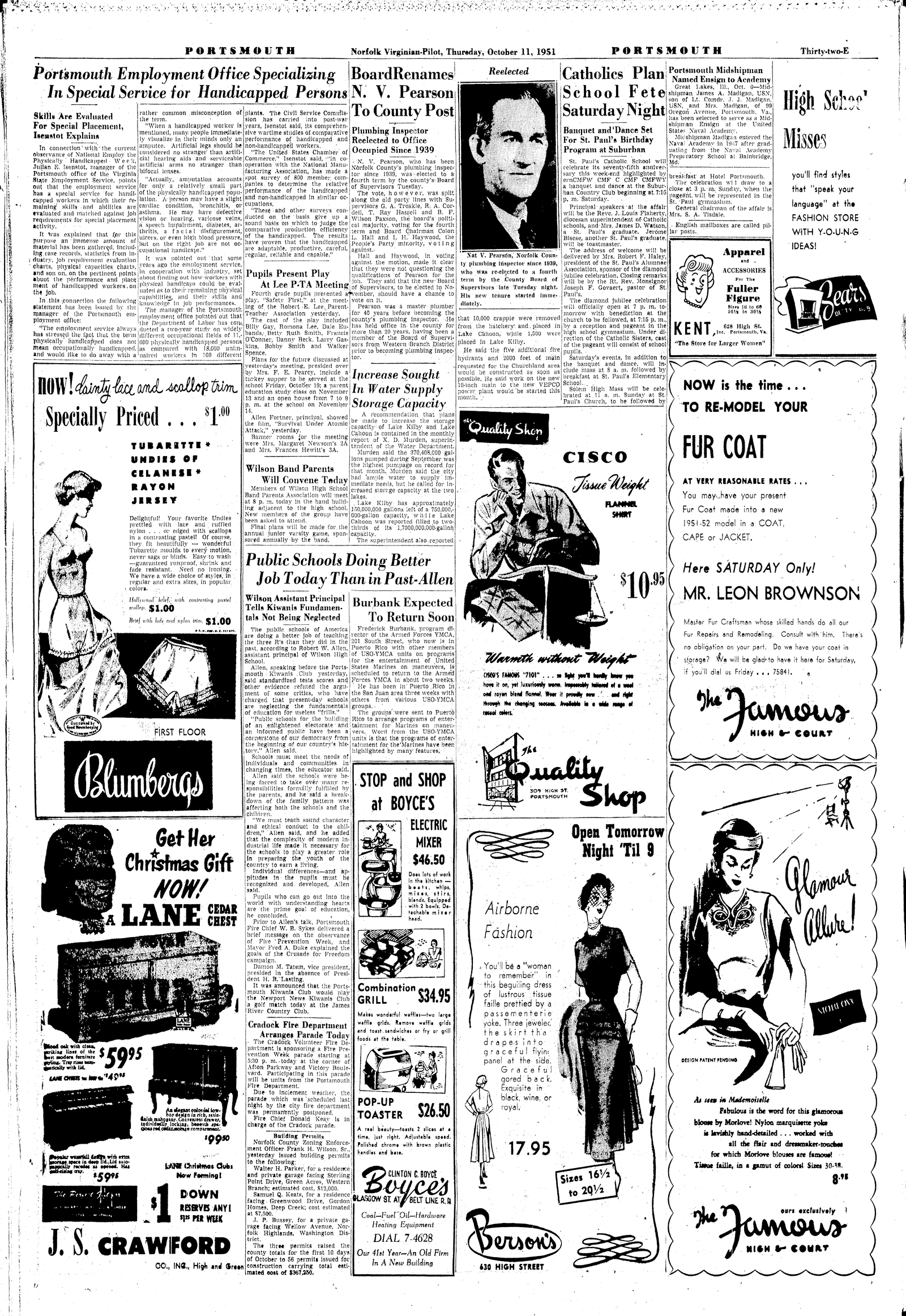
EDITOR’S NOTE: The following is a story from the Oct. 11, 1951, editions of The Virginian-Pilot on plans for a weekend of events to celebrate the 75th anniversary of Catholic schools in Portsmouth.
What you will read below attempts to be a faithful re-creation of the original story, with any typographical errors, inconsistent punctuation and inconsistent elements of style.
St. Paul’s Catholic School will celebrate its seventy-fifth anniversary this week-end highlighted by ernCMFW CMF C CMF CMFWY a banquet and dance at the Suburban Country Club beginning at 7:15 p. m. Saturday.
Principal speakers at the affair will be the Reve. J. Louis Flaherty, diocesan superintendent of Catholic schools, and Mrs. James D. Watson, a St. Paul’s graduate. Jerome Bisese, another St. Paul’s graduate, will be toastmaster.
The address of welcome will be delivered by Mrs. Robert F. Haley, president of the St. Paul’s Alumnae Association, sponsor of the diamond jubilee celebration. Closing remarks will be by the Rt. Rev. Monsignor Joseph F. Govaert, pastor of St. Paul’s.
The diamond jubilee celebration will officially open at 7 p. m. tomorrow with benediction at the church to be followed, at 7:15 p. m., by a reception and pageant in the high school gymnasium. Under direction of the Catholic Sisters, cast of the pageant will consist of school pupils.
Saturday’s events, in addition to the banquet and dance, will include mass at 8 a. m. followed by breakfast at St. Paul’s Elementary School.
Solem High Mass will be celebrated at 11 a. m. Sunday at St. Paul’s Church, to be followed by breakfast at Hotel Portsmouth.
The celebration will draw to a close at 3 p. m. Sunday, when the pageant will be represented in the St. Paul gymnasium.
Chairman of the affair is Mrs. S. A. Tisdale.
-
(Third in a series of three)
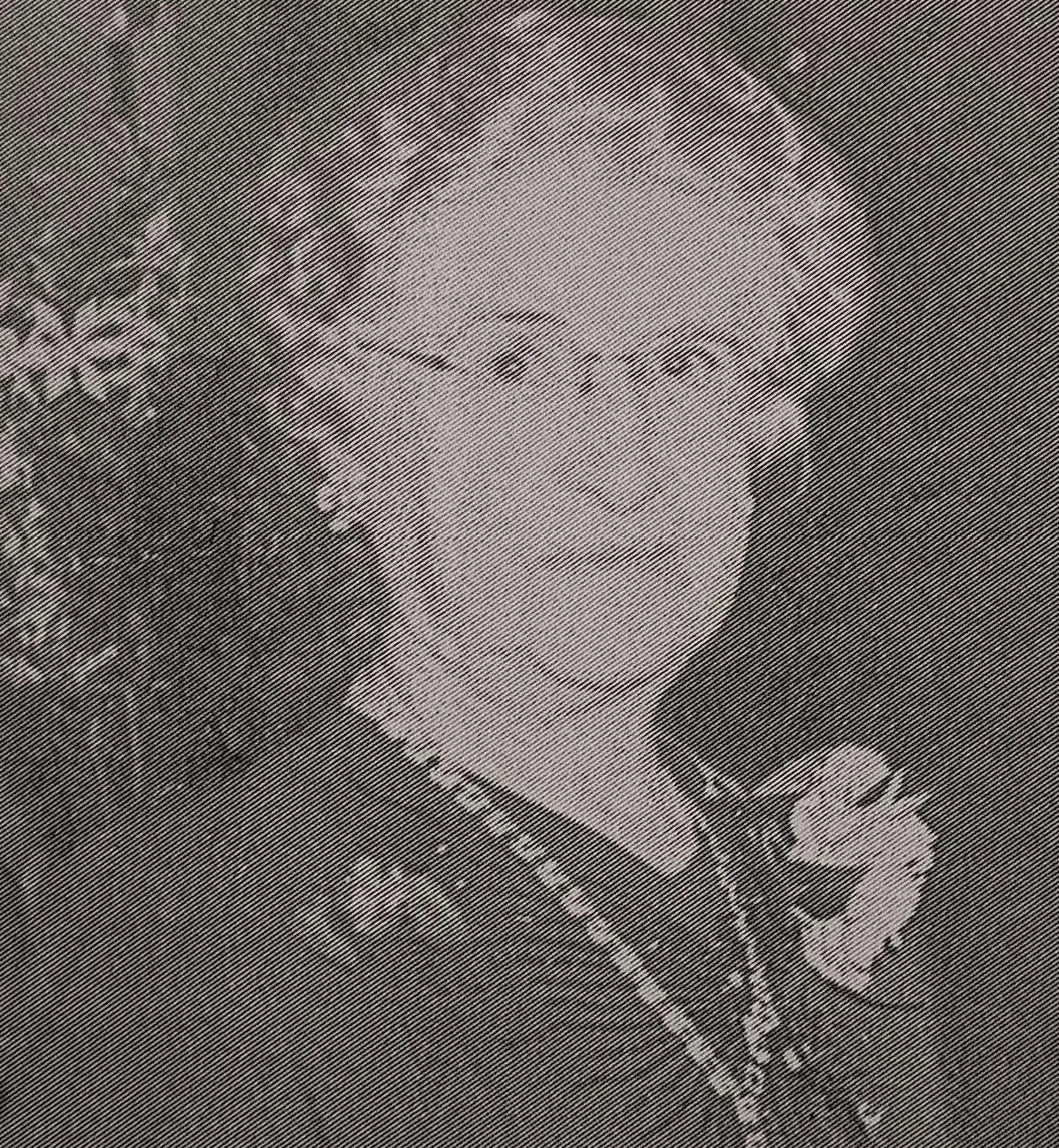
EDITOR’S NOTE: The following is a speech given Oct. 13, 1951, by St. Joseph’s Academy alumna Margaret Theresa McHugh Watson at a gala celebration of the 75th anniversary of Catholic schools in Portsmouth.
Watson was the organist at St. Paul’s Catholic Church from 1893 to 1947. At the time she gave this speech, she was the oldest living graduate of St. Joseph’s.
She died the following September at age 77 and is buried in Oak Grove Cemetery in Portsmouth.
Her speech is an appendix in “A Story of Faith / 1804-2000 / St. Paul’s Catholic Church.”
I decided when I retired as organist that my day of speech-making was at an end, but Catholic education (a cause for which I have always worked with deep interest), combined with the Diamond Jubilee, and the fact that I am the oldest living graduate of my Alma Mater, was a combination too strong to refuse. I am proud of the latter distinction but not so thrilled about it, as I would rather be one of the younger graduates. Still I am deeply grateful to our Lord for having blessed me with unusual good health, and a happy, colorful life.
The era of which I am about to speak was the age of the lamp-lighter, the horse and buggy, jingle bell sleighs, the first horse-drawn street car, large penny pickles, two chocolate drops for one cent, a penny’s worth of home-made taffy, girls wearing bangs with pigtails hanging down their backs and dresses much longer than those worn by the children and girls of today.
Prior to the opening of St. Joseph’s Academy (now St. Paul’s School), many of our mothers (among them my own dear mother), in order to receive a Catholic Education, attended St. Mary’s School in Norfolk. Later on, Mrs. Eliza Gregory, a prominent Catholic woman of Portsmouth, started a select school for girls which was attended by both Catholic and non-Catholics. It was she who bequeathed the money to the church which was used to build St. Paul’s for boys, the site of our present High School.
In 1870, just five years after the Civil War, a zealous young Irish priest, Reverend Thomas J. Brady, came to Portsmouth. Six years later in 1876, as a result of his keen foresight and indefatigable courage he brought a little band of four Sisters of Charity of St. Vincent de Paul to help him realize his aim to extend Catholic Education to the children of Portsmouth. This was the beginning of St. Joseph’s Academy, seventy-five years ago.
There was a Dutch roof, frame house on the corner of Dinwiddie and King Streets and a trellised arbor that joined this to the brick house which was the school. The downstairs of the wooden structure served as dining room and kitchen, and the upstairs was used as a class-room for the boys. The girls were taught in the brick building, which also contained the parlor, chapel and Sisters’ dormitory. The frame house later was pulled down and the brick building enlarged.
As far as I know, we have three living charter members of St. Joseph’s Academy: Mrs. Blanche Bilisoly Borum (Mrs. James A. Borum), of Portsmouth, Mrs. May Godwin Parker (Mrs. William C. Parker) of Virginia Beach, Virginia, and Miss Mary S. O’Connor, also of this city. Among the many charter members who have passed away, and of whom I have no record, one was Mrs. James A. Mulvey, mother of our beloved Margaret Mulvey Hewitt, who worked faithfully for our Alumnae and whose presence we miss here tonight. The first graduate of St. Joseph’s Academy in 1885 was Mrs. Anne Ward Williams, a non-Catholic, who reared all her children in the Catholic faith, and afterwards became a Catholic herself. She was the mother of Mrs. Laura Williams Riggan and the grandmother of Mary Riggan, Betty Boggs Cunningham and James Boggs, all graduates of our school. The second graduate was Miss Mary Boyle, Class of 1887. In 1889, Mrs. Mary Genevieve O’Connor Boyd and Mrs. Annie Johnson Williams received graduation honors. I started to school in “The Roaring Eighties” and graduated in “The Gay Nineties.” It was remarkable that the three of us who graduated together lived until the chain was broken last February, when Mrs. Mary Irwin Hulcher passed on to her eternal reward. The third member of our class, Mrs. Virginia Griffin Riddick, now resides in Washington, D.C., and regrets that she cannot be with us upon this memorable occasion. In 1894 there were two graduates: Mrs. Mary Nolan Jones and Mrs. Margaret Clarke Halligan. Mrs. Jones is with us tonight.
There were three grades in the original school: the Primary, Intermediate and Advanced Class, equivalent to the High School today.
My childhood was so linked with St. Joseph’s Academy that I find it difficult not to reminisce. In the first grade, to help us learn the alphabet, we were taught a little song which I discovered afterwards to be a melody from Hayden’s “Surprise Symphony.” Much time and attention were given to the three “R’s,” reading, writing, and arithmetic, especially writing. Spencerian penmanship with its attractive shading was taught, and many of the girls excelled to such an extent their handwriting looked like copy-plate. Music meant so much in those days, sometimes two or three in a family taking piano lessons at the same time. Well do I remember the old wooden pump in the yard, with its iron dipper attached by a chain, hard to work but it brought forth water that was truly “Nectar of the gods.” The statue of our Blessed Lady in the center of the lovely flower garden was the first shrine I can remember, instilling in us at an impressionable age, a love for the Mother of God. On the feast of St. Joseph, there was a procession of the children around the grounds and streets in the vicinity of the school, all singing hymns and the two largest boys carrying the statue of our patron Saint.
I would like to say a few words about our commencement exercises, as they were truly unique. I do not know why they were called commencement exercises as they were at the close of school and around the 25th of June. They were held in a hall that was used as a chapel when the church was burned, the site where the Grammar School now stands. In the center of the stage was a large American flag, canary birds in cages were suspended from the ceiling and beautiful magnolias added their fragrance to the decorations. The singing of the birds blended with the solos, duets, recitations, etc. Gold and silver crowns and books were given as premiums, and I will never forget the thrill I felt when Father Brady placed a gold crown upon my head at the end of my first year. I felt as if I were ready to fly to Heaven.
In the intermediate grades besides a continuance of the three R’s, we took up sewing, drawing, music, all gentle arts. In fact, good manners and gentility were the order of the day, to such an extent that we had a special course on etiquette. I would like to tell you a little incident that illustrates the attention that was paid to deportment. One day, in going up the steps in the exuberance of youth, we made considerable noise and were met by our teacher, who proceeded to reprimand us for not acting like young ladies. Her punishment was that we should all remain after school and write one thousand times “I ran up the stairs like a wild Indian.” I know we never ascended the stairs like that again, but many a time I have wished that I could run up the stairs like a wild Indian. That was one of the nights that I met the lamp-lighter carrying a ladder and stopping at the corners to light the gas lamps.
Physical instruction was taught by the use of dumbbells to the accompaniment of music, everybody counting. These exercises were very artistic and used sometimes in the commencements. There was a great deal of marching on those days and I happened to be the official pianist. “When You and I Were Young, Maggie” was the favorite tune, so I had to play it over and over. (HERE’S A YOUTUBE LINK TO “MAGGIE”: https://youtu.be/0i-kXaS7FSY?is=kLDKAqVXRCTmpd2U)
Among the studies in the Advanced Grade were geography, rhetoric, chemistry, physiology, scientific knowledge, algebra, geometry, trigonometry, even botany and astronomy, and a Compendium of History comprising all the countries of the world from 4004 B. C. to that time. One Sister taught the boys and the other three the girls, the Sister Superioress teaching the advanced class. These Sisters of the early years were truly pioneers. They made their own fires, carried buckets of coal up the steps, cleaned out ashes, took care of their laundry, and performed many a menial task, all accompanied with light hearts and smiling faces for the honor and glory of God.
It was amazing how much knowledge these Sisters had acquired in their young lives, as most of them were young, and I wonder if we realize how much they imparted to us that helped to mold our lives. I know that my beloved music teacher, Sister Regina Horrigan of blessed memory, launched me upon my career in music. It was she who taught me to play for the singing classes, who gave me pipe organ lessons and had me playing for the children’s choir, when I was twelve years old. She also induced Father Brady to allow me to substitute as organist, a substitution that extended over fifty years. When I was timid and hesitant, she would tell me that God had given me a talent for music, but that I lacked ambition. That was a challenge, and a challenge always gets action. I would also like to pay tribute to Sister Margaret McCarthy, who was my teacher for six years out of the ten I went to school. Strict but very thorough, she had a wonderful fund of knowledge, and as a teacher, I do not believe that she could be surpassed, even in this day and time. This would not be complete without mentioning Sister Mary Joseph Holly, whom we all loved and revered. She was here forty-one years from 1883 to 1924 and is buried in St. Paul’s Cemetery next to Sister Mary Garvey, close to the priests and people she loved and served. May they rest in peace.
Much can be said for the people who have carried on the traditions of St. Joseph’s Academy, now St. Paul’s School, but my toast is to the Pioneers. They taught fifty, sixty and seventy years ago, and while they had no degrees, they turned out pupils who became fine men and women, a credit to their church, school, and community.
May these pioneers from their high places in Heaven be reaping the reward of the many sacrifices they made, instilling knowledge and religion into the minds and souls of those entrusted to their care. The children of that generation became the men and women who worked and sacrificed to give you and your children the magnificent edifice that is the St. Paul’s of today!
-
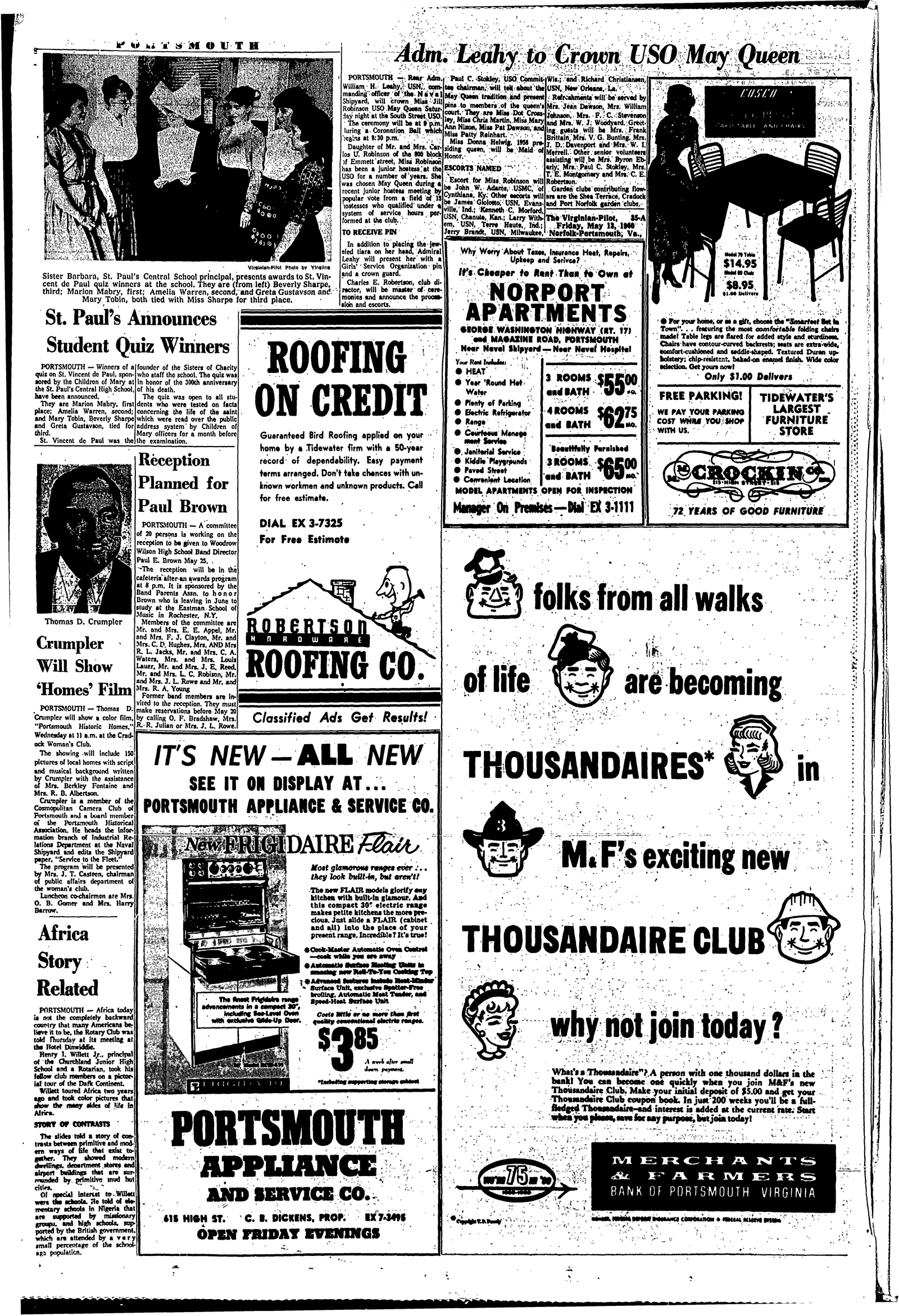
EDITOR’S NOTE: Today’s post is the first of many you will read from the files of The Virginian-Pilot, the Ledger-Star and several other newspapers in Virginia on events, trends and issues that affected the Catholic schools in Portsmouth. Our hope is that these contemporaneous accounts, stitched together over the next five months, will give readers a fuller appreciation of the history of Portsmouth’s parochial schools.
The following is a story from the May 13, 1960, editions of The Virginian-Pilot on the winner of a quiz on St. Vincent de Paul at St. Paul’s Central High School.
What you will read below attempts to be a faithful re-creation of the original story, with any typographical errors, inconsistent punctuation and inconsistent elements of style.
PORTSMOUTH –– Winners of a quiz on St. Vincent de Paul, sponsored by the Children of Mary at the St. Paul’s Central High School, have been announced.
They are Marion Mabry, first place; Amelia Warren, second; and Mary Tobin, Beverly Sharpe and Greta Gustavson, tied for third.
St. Vincent de Paul was the founder of the Sisters of Charity who staff the school. The quiz was in honor of the 300th anniversary of his death.
The quiz was open to all students who were tested on facts concerning the life of the saint which were read over the public address system by Children of Mary officers for a month before the examination.
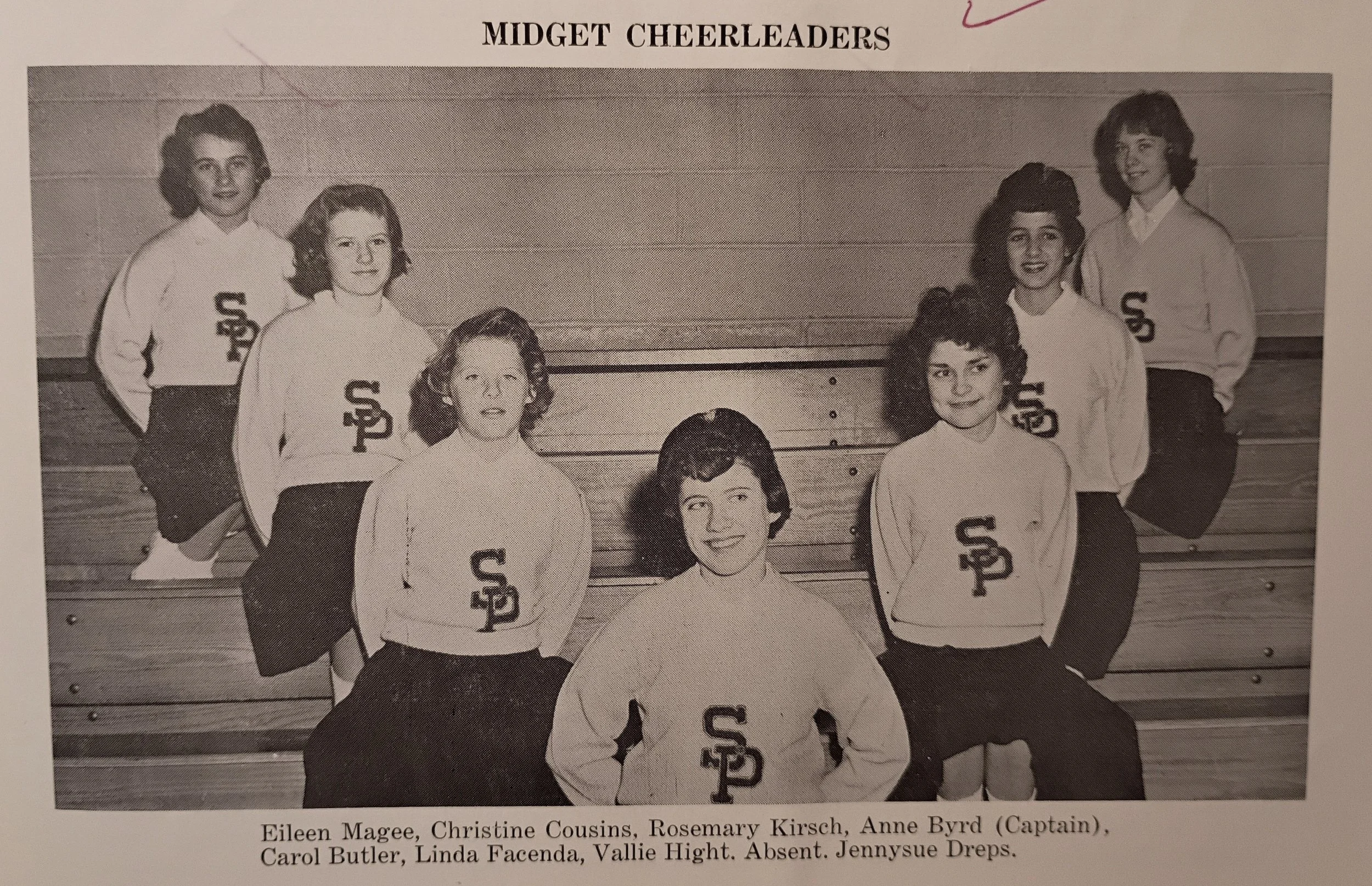
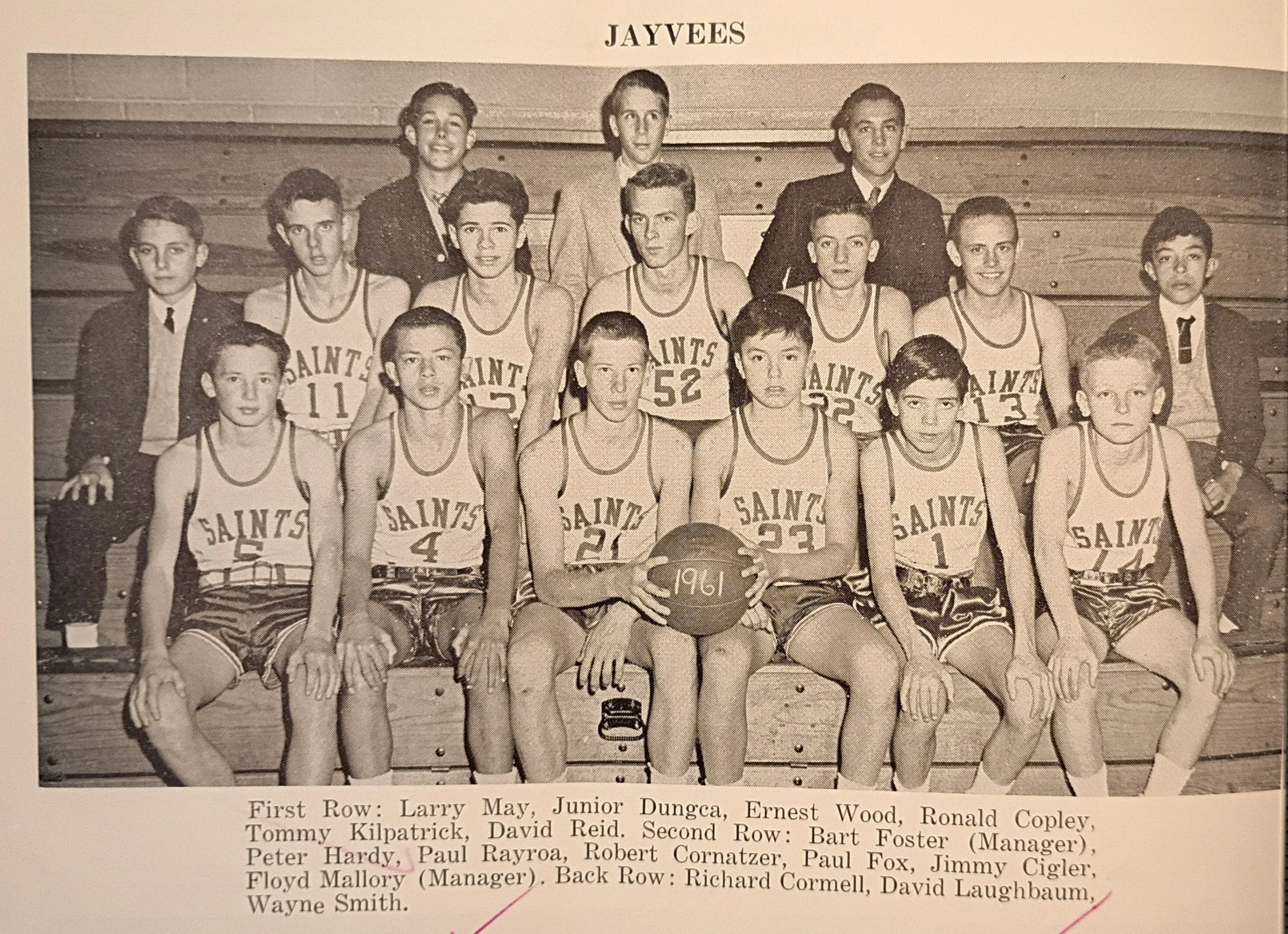
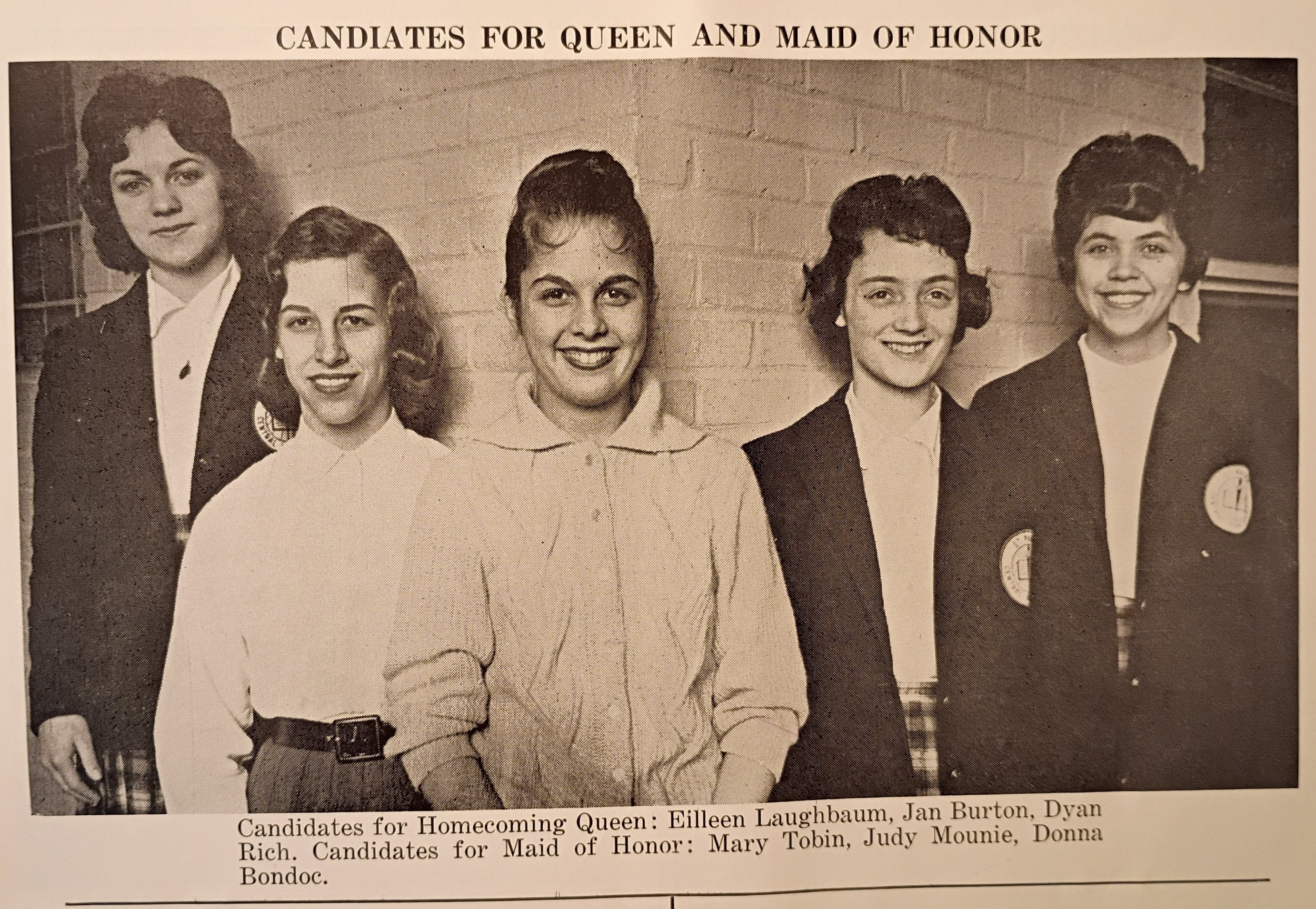
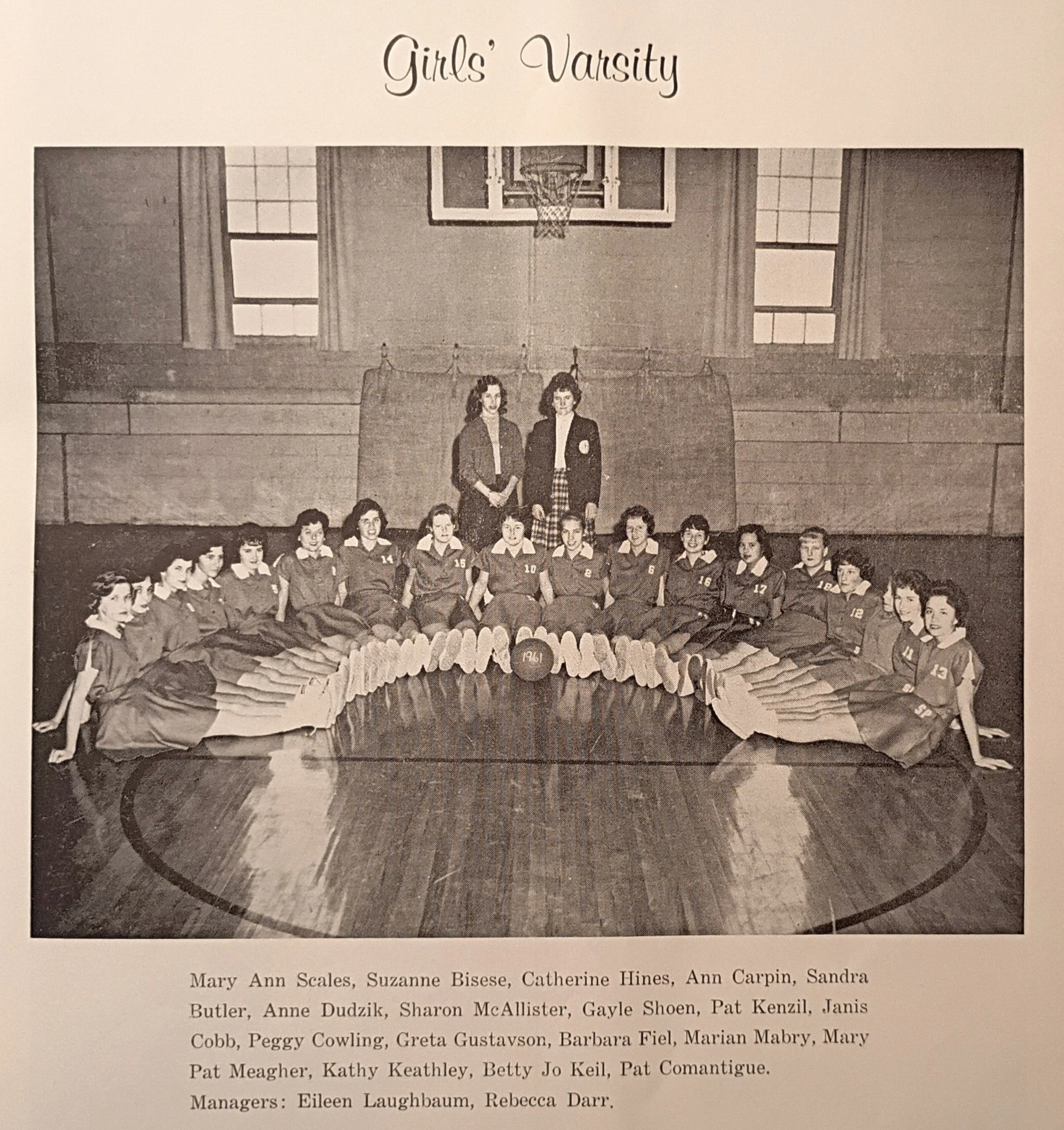
-
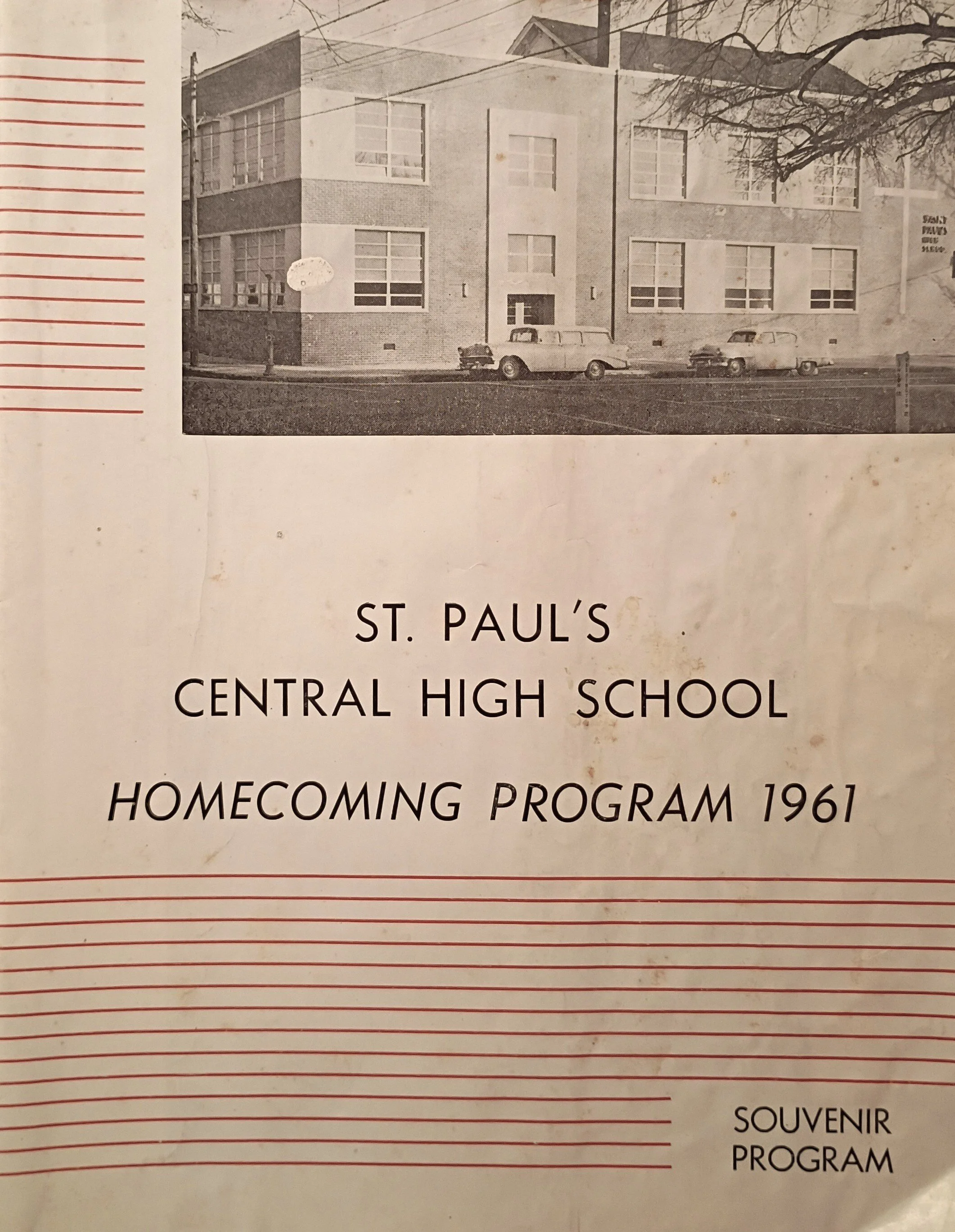
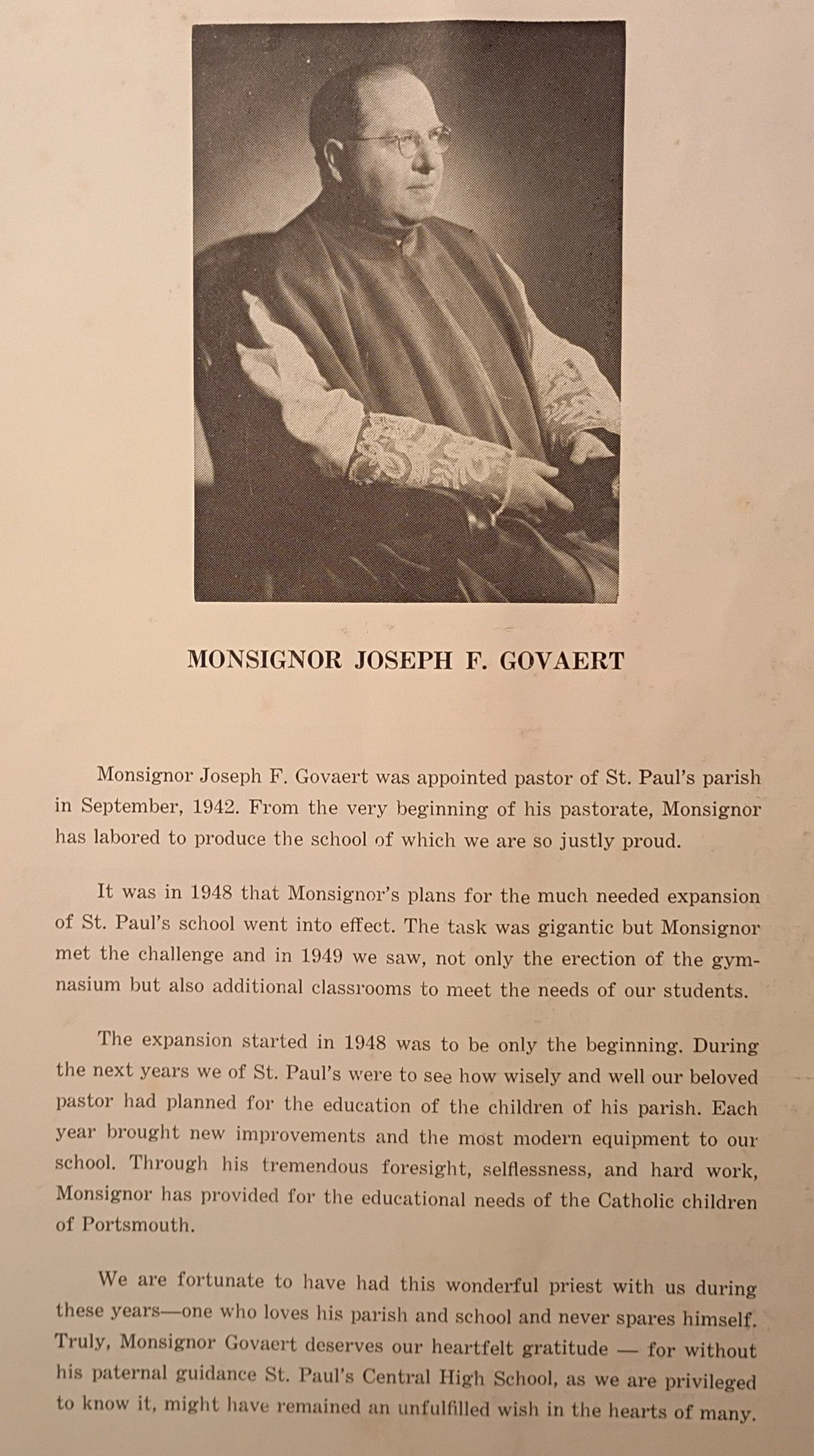
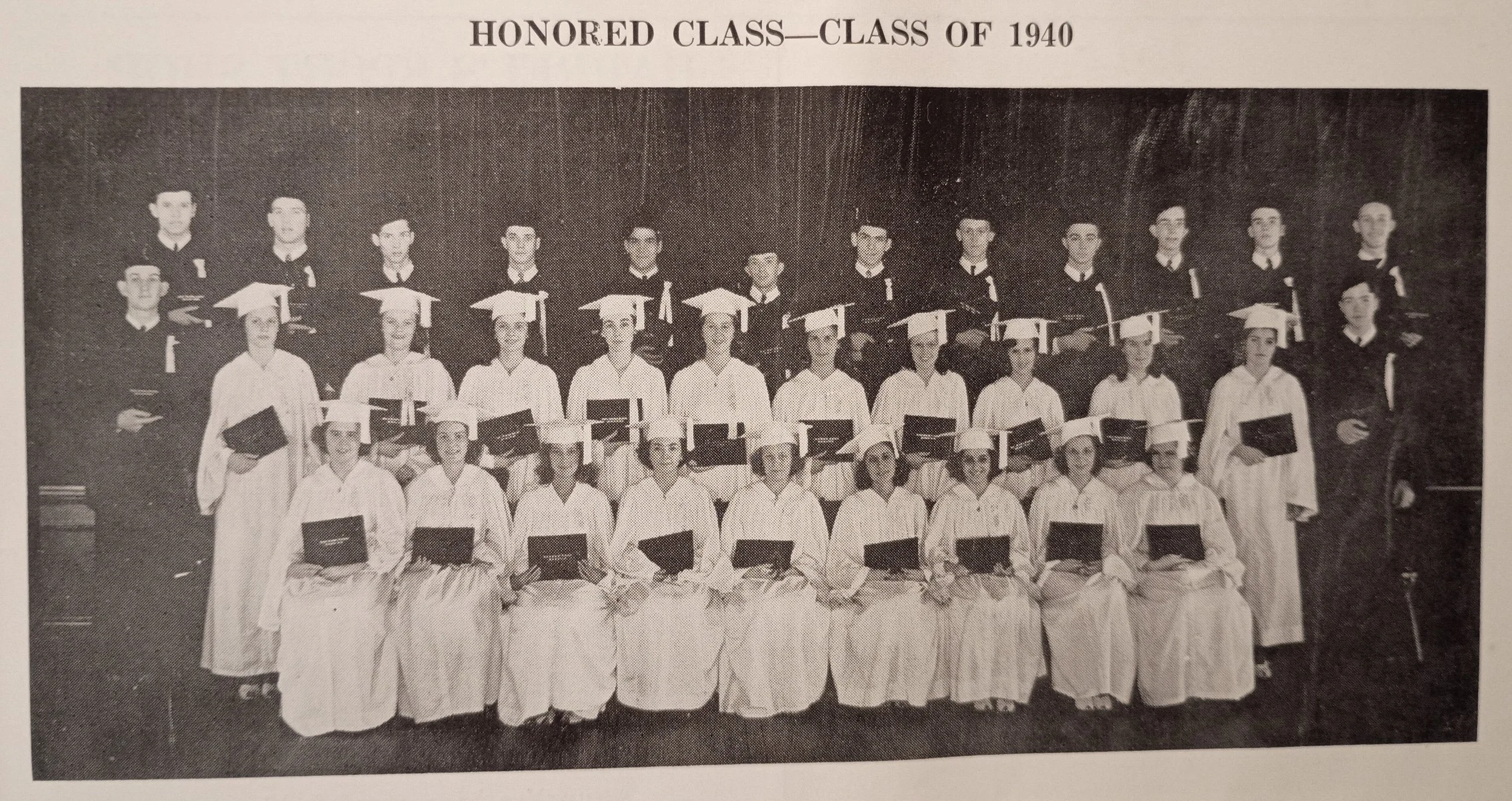
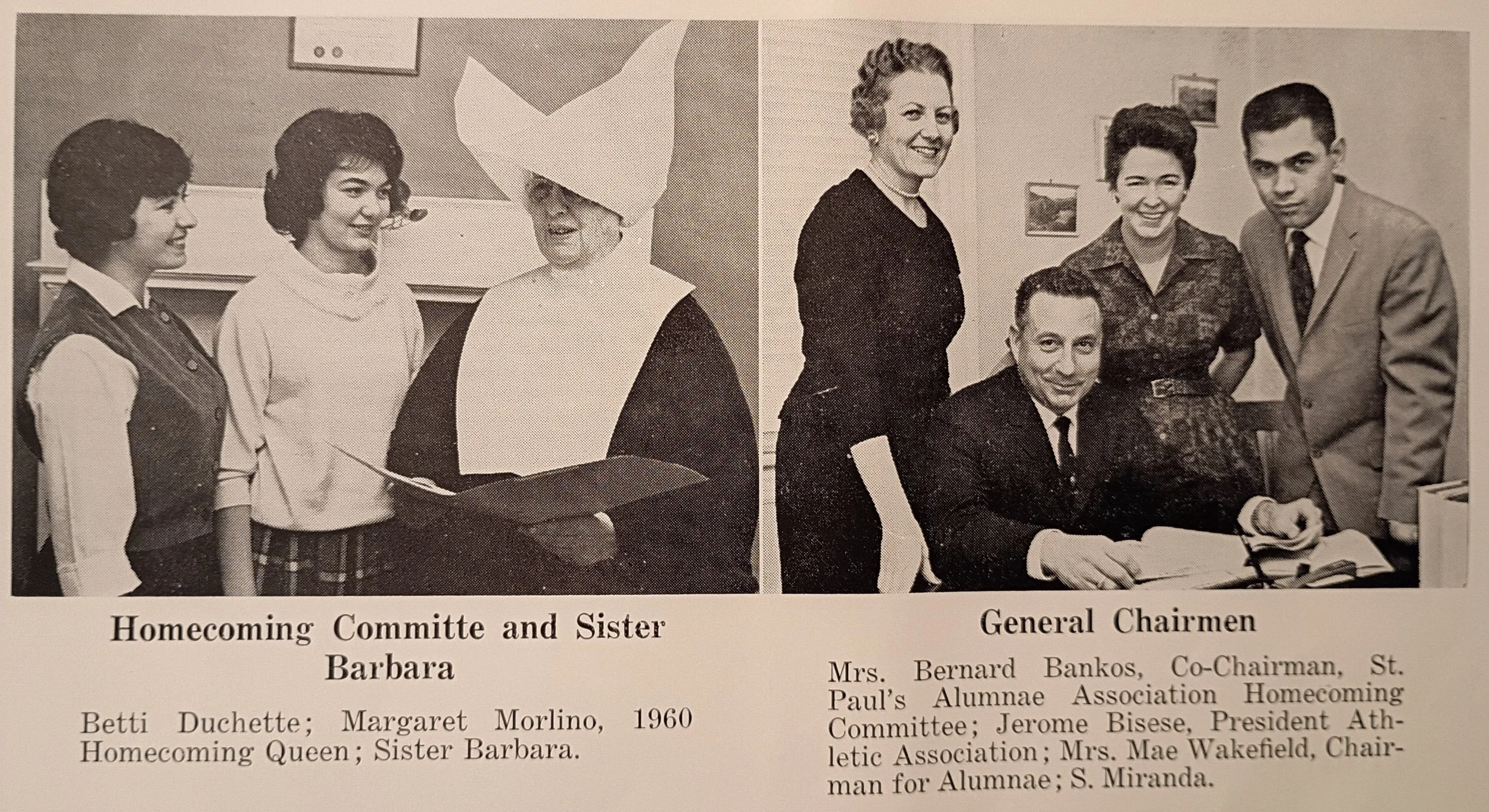
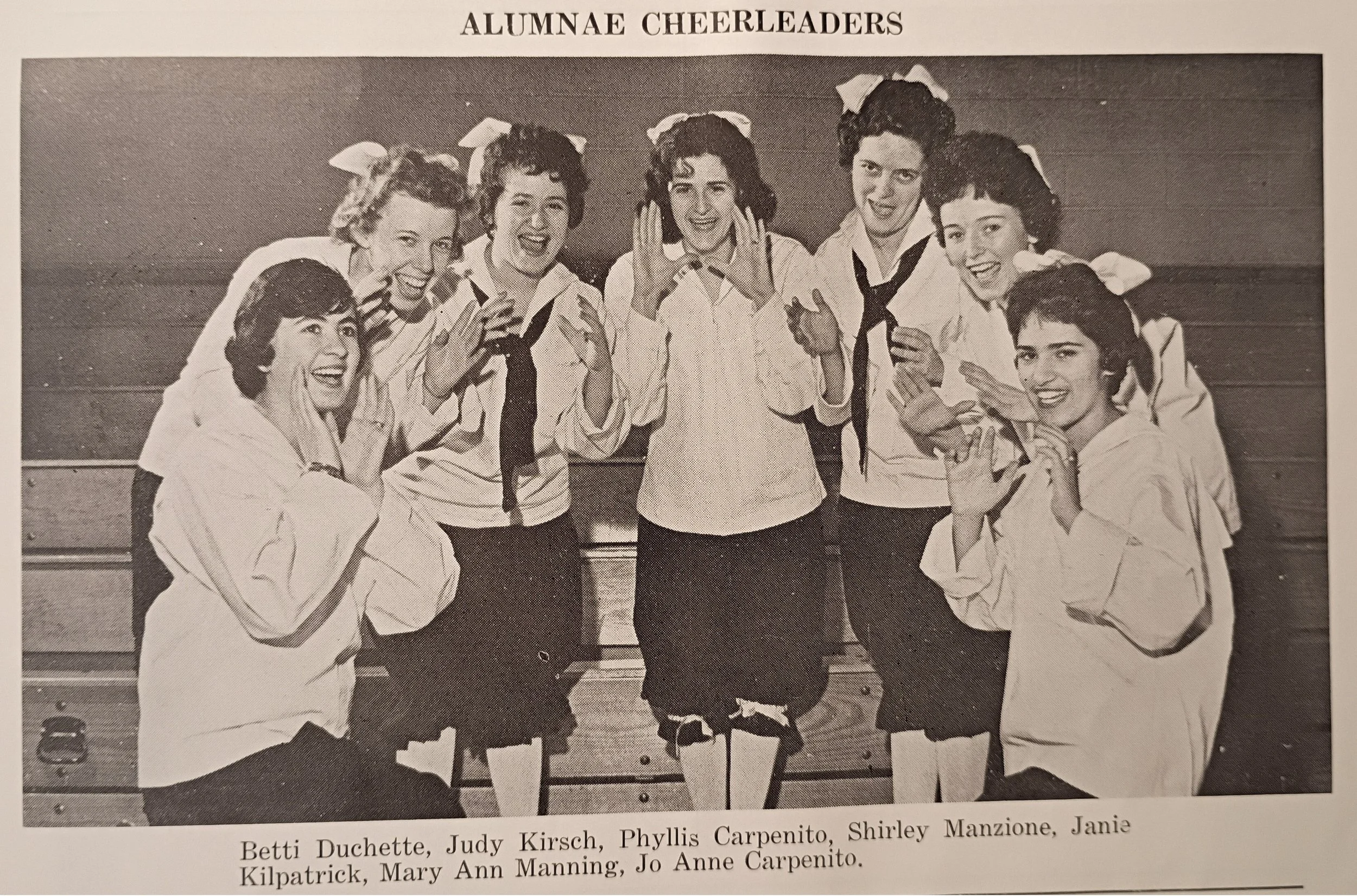
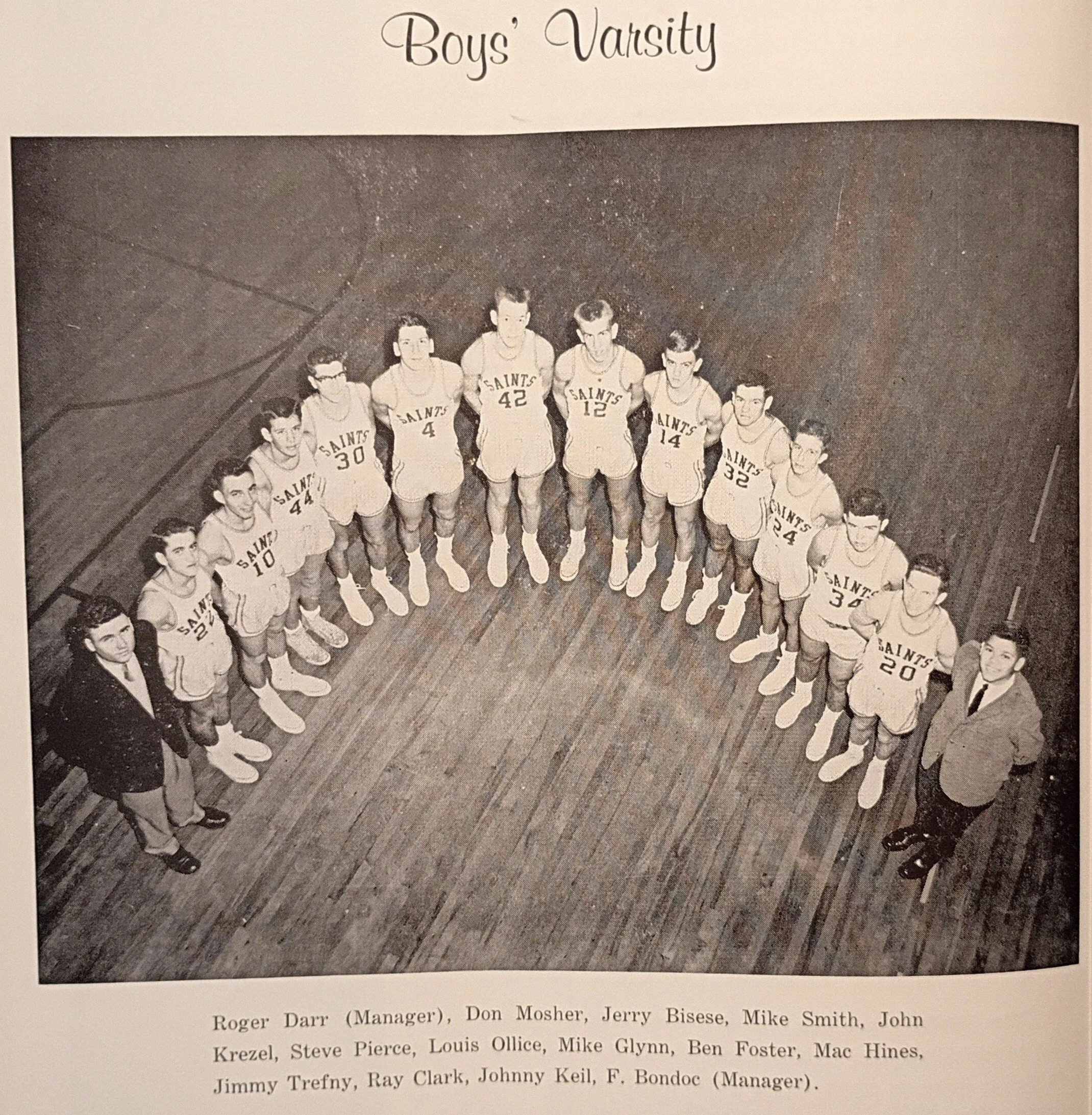
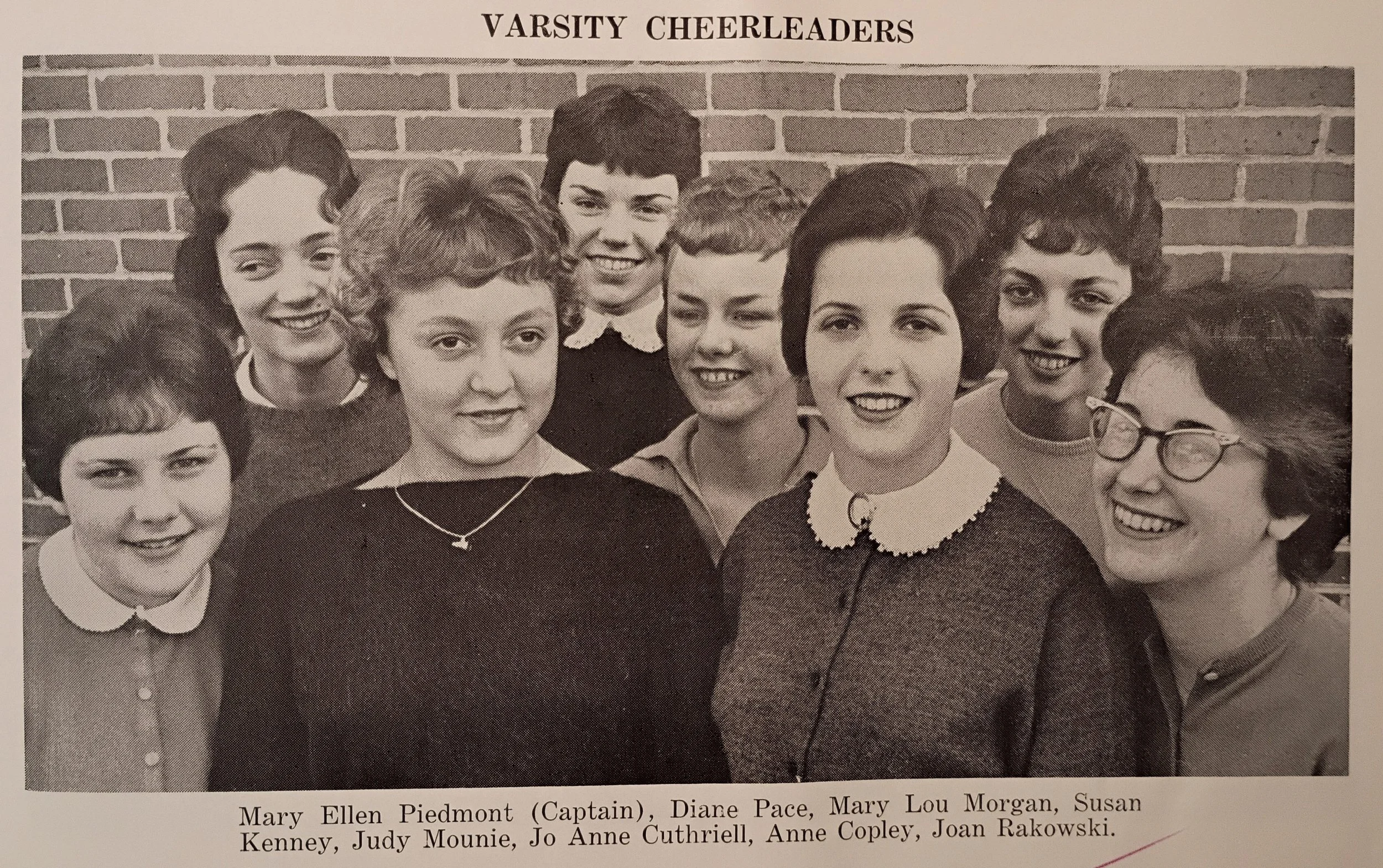
EDITOR’S NOTE: This is the first of a dozen or so posts based on the content of souvenir homecoming programs from the 1960s and 1970s.
Programs from athletic events, especially from homecoming weekends, are a treasure trove of information and memories. Many of the programs you’ll see come from the archives at St. Paul’s Church; others are from personal collections.
The programs include photos, both from the contemporaneous student body and of the alumni being honored.
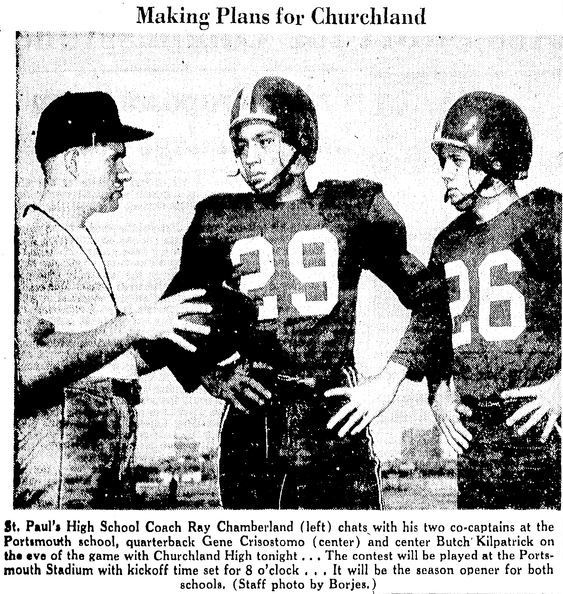
Ads in the programs are a reminder of the dozens of Portsmouth businesses that supported our schools. And many of the programs featured “booster” pages with long-lost signatures of students, faculty, alumni and parents.
Expect to see photos of grandparents, parents, aunts, uncles, siblings, cousins, teachers, friends – and perhaps even your young self.
-
By BRICE ANDERSON
Class of 1976
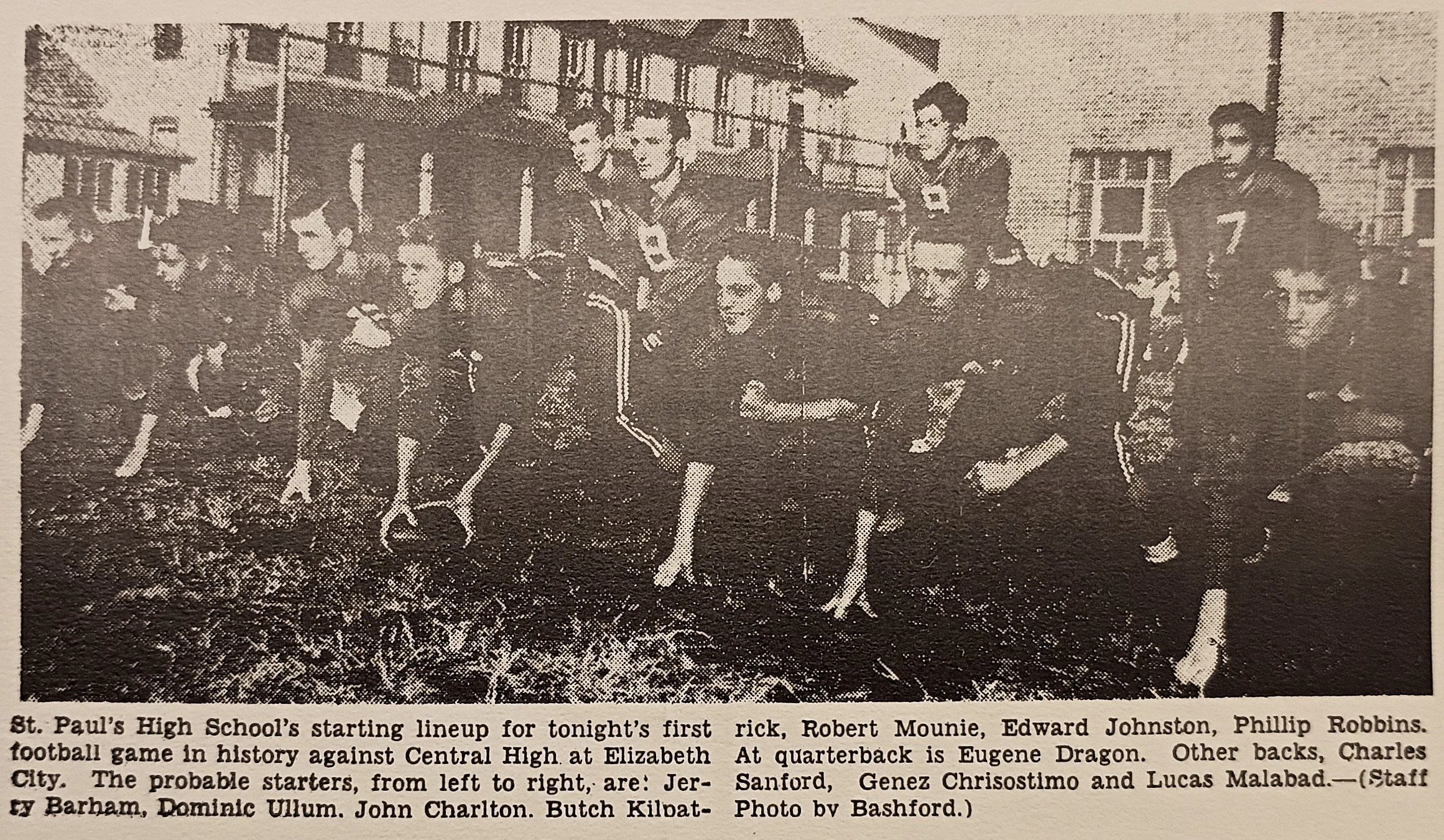
Now that the 2026 football season is under way, it’s time to explore one of the great forgotten chapters in the history of Catholic schools in Portsmouth: the four-year period when St. Paul’s High School fielded a football team.
You read that right – a football team.
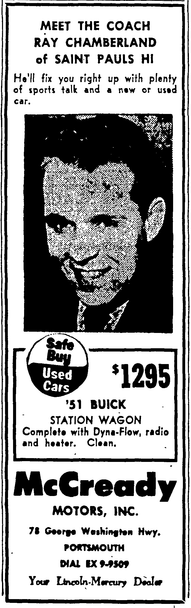
The team was led from 1950 to 1953 by the enterprising Ray Chamberland, a native of Woonsocket, R.I., who, in addition to teaching, coached football and basketball and sold cars at McCready Motors, the local Lincoln-Mercury dealership. (See his newspaper ad from Nov. 16, 1955.)
Stories in The Virginian-Pilot about the St. Paul’s gridders invariably mentioned Chamberland and Notre Dame in the same sentence.
Chamberland was a member of the Notre Dame Class of 1949, but he did not play varsity football for the Fighting Irish. He gained coaching experience in the South Bend, Ind., school’s robust intramural football program.
He also gained stage experience in college. From the Dec. 14, 1945, issue of The Notre Dame Scholastic student news magazine, in a review of a campus variety show: “From time to time throughout the performance, ‘Smiling’ Ray Chamberland trips across the footlights in his BTO jacket to give a series of well-timed imitations, packed with punch and spontaneous wit.”
Chamberland spent just seven years in Portsmouth, all in the employ of St. Paul’s High, but his ties to the city lasted a lifetime. He married a Portsmouth woman, Rose Rita Reagan, in January 1953. Their marriage lasted until Mrs. Chamberland’s death in February 2014.
Chamberland left St. Paul’s in 1957 to take a job coaching and teaching in the Southern Berkshire Regional School District, based in Sheffield, Mass. He rose to the rank of principal in 1978 and retired in 1987.
Online condolences posted after Chamberland’s death on Nov. 17, 2014, included at least three from Portsmouth: someone named Charlie, and from St. Paul’s alums Bernie Kirsch and Sandra Waldren Walsh.
Said Charlie: “We all have fond stories to tell about our relationship with a caring and challenging coach. He will be remembered by the former students and players in Portsmouth, VA for a long time to come.”
Said Bernie: “Ray came to Portsmouth, VA in 1950 after graduation. He started as a teacher and assistant coach and in a short time coached all of the St Paul's High School sports teams. He was an inspirational young coach full of energy and determination to learn the trade. Those of us who were students then were the beneficiaries of his hard charging but caring style.
“His bride, Rita, was a Portsmouth lass and theirs was a wonderful lifelong love story. He leaves behind a legacy of love. For those of us who knew him he is unforgettable and will always live in our hearts.
“My condolence to his family and friends. May he rest in peace.”
Said Sandra: “Dear Coach - What a legacy! Not only your and Rita's family but the extended family of all your former students. The wonderful influence and character building you provided us will continue. I am so glad I got the opportunity to let you know that. Rest in Peace Coach. St. Paul's, Portsmouth, VA, Class of '55.”
NEXT: The Saints have high hopes for their game against Norfolk Catholic, also new to football in 1950.
-
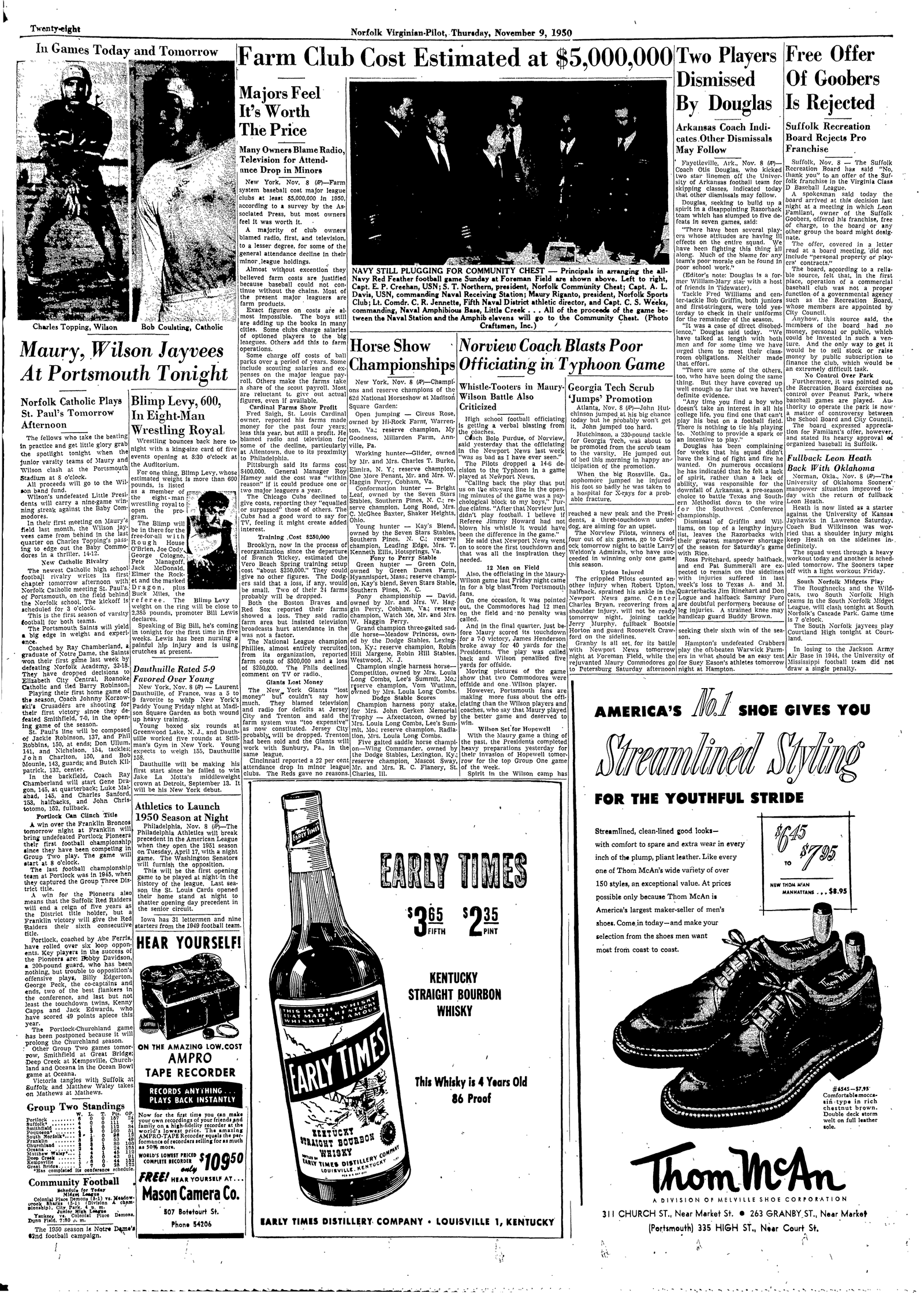
EDITOR’S NOTE: The following is excerpted from a preview story in the Nov. 9, 1950, editions of The Virginian-Pilot on the first-ever football game between St. Paul’s High School and Norfolk Catholic High School.
What you will read below attempts to be a faithful re-creation of the original story, with any typographical errors, inconsistent punctuation and inconsistent elements of style.
.The newest Catholic high school football rivalry writes its first chapter tomorrow afternoon with Norfolk Catholic meeting St. Paul’s, of Portsmouth, on the field behind the Norfolk school. The kickoff is scheduled for 3 o’clock.
This is the first season of varsity football for both teams.
The Portsmouth Saints will yield a big edge in weight and experience.
Coached by Ray Chamberland, a graduate of Notre Dame, the Saints won their first game last week by defeating Norfolk Academy, 32-18. They have dropped decisions to Elizabeth City Central, Roanoke Catholic and tied Barry Robinson.
Playing their first home game of the season, Coach Johnny Korzowski’s Crusaders are shooting for their first victory since they defeated Smithfield, 7-0, in the opening game of the season.
St. Paul’s line will be composed of Jackie Robinson, 137, and Phil Robbins, 150, at ends; Don Ullum, 141, and Nichelson, 154, at tackles; John Charlton, 150, and Bob Mounie, 143, guards; and Butch Kilpatrick, 132, center.
In the backfield, Coach Ray Chamberland will start Gene Dragon, 145, at quarterback; Luke Malabad, 145, and Charles Sanford, 153, halfbacks, and John Christotomo, 152, fullback.
NEXT: The first football game between the Saints and the Crusaders has a lopsided outcome.
-
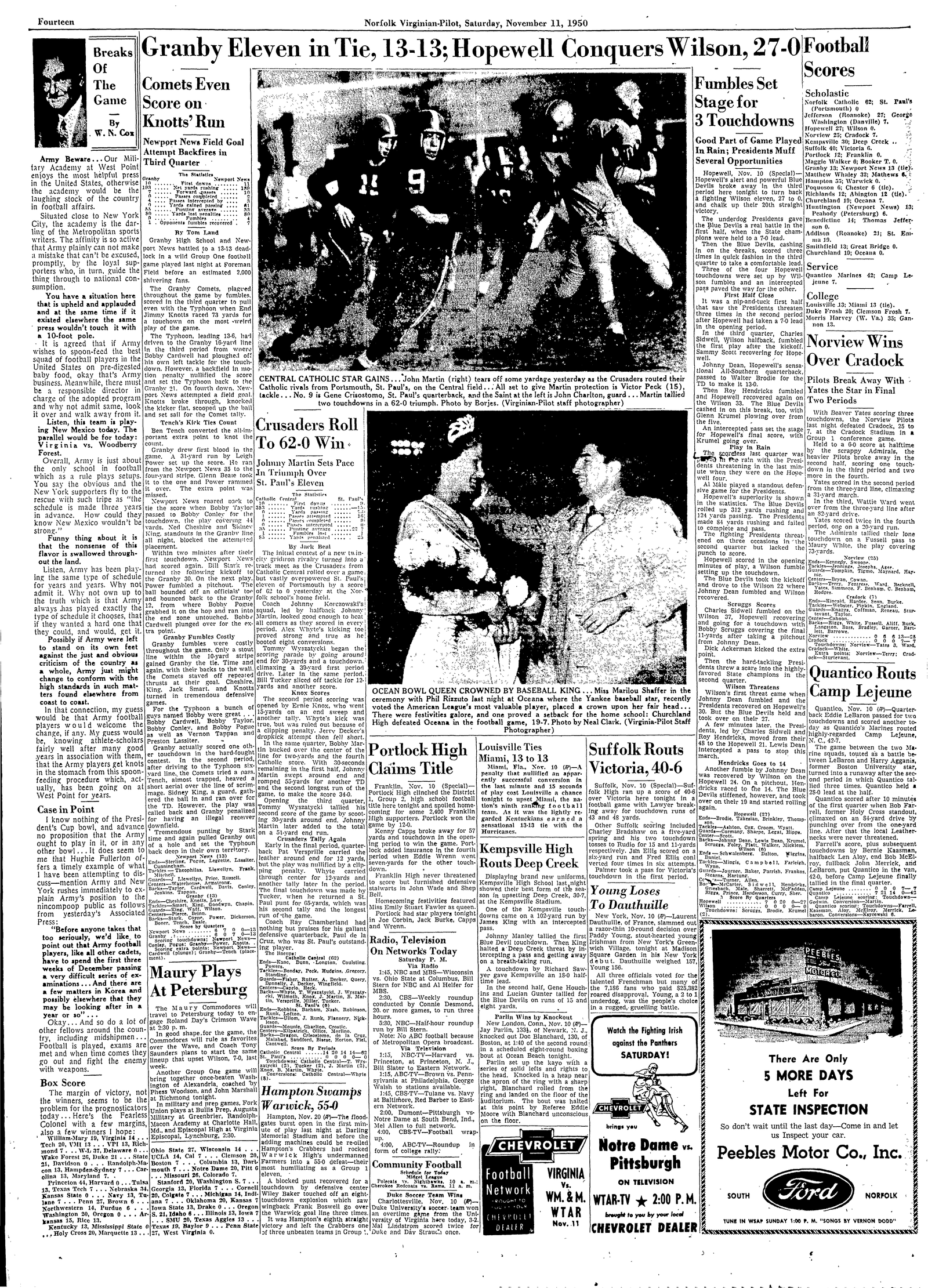
EDITOR’S NOTE: The following is a story from the Nov. 11, 1950, editions of The Virginian-Pilot on the result of the first-ever football game between St. Paul’s High School and Norfolk Catholic High School.
What you will read below attempts to be a faithful re-creation of the original story, with any typographical errors, inconsistent punctuation and inconsistent elements of style.
By JACK BEAL
The initial contest of a new twin-city gridiron rivalry turned into a track meet as the Crusaders from Catholic Central rolled over a game but vastly overpowered St. Paul’s eleven of Portsmouth by a score of 62 to 0 yesterday at the Norfolk school’s home field.
Coach Johnny Korczowski’s squad, led by halfback Johnny Martin, looked good enough to beat all comers as they scored in every period. Alex Whyte’s kicking toe proved strong and true as he booted eight conversions.
Tommy Wyszatycki began the scoring parade by going around end for 30-yards and a touchdown, climaxing a 39-yard first period drive. Later in the same period, Bill Tucker sliced off tackle for 12-yards and another score.
The second period scoring was opened by Ernie Knox, who went 15-yards on an end sweep and another tally. Whyte’s kick was true, but was ruled out because of a clipping penalty. Jerry Decker’s dropkick attempt then fell short.
In the same quarter, Bobby Martin bucked over the center of the line for two-yards and the fourth Catholic score. With 30-seconds remaining in the first half, Johnny Martin swept around end and romped 55-yards for another TD and the second longest run of the game, to make the score 34-0.
Opening the third quarter, Tommy Wyszatycki tallied his second score of the game by scooting 30-yards around end. Johnny Martin later added to the total on a 51-yard end run.
Early in the final period, quarterback Pat Versprille carried the leather around end for 12 yards, but the play was nullified by a clipping penalty. Whyte carried through center for 12-yards and another tally later in the period. The final touchdown was made by Tucker, when he returned a St. Paul punt for 65-yards, which was his second tally and the longest run of the game.
Coach Ray Chamberland had nothing by praises for his gallant defensive quarterback, Paul de la Cruz, who was St. Paul’s outstanding player.
The lineups:
Catholic Central (62)
Ends – Kane, Dunn, Longton, Coulsting, Powers.
Tackles – Bonday, Peck, Hudgins, Gregory, Standing.
Guards – Fisher, Rutter, A. Decker, Query, Donnelly, J. Decker, Wingfield.
Backs – Whyte, T. Wyszatycki, J. Wyszatycki, Wilmoth, Knox, J. Martin, B. Martin, Versprille, Miller, Tucker.
St. Paul’s (0)
Ends – Robbins, Barham, Nash, Robinson, Runk, Lofton.
Tackles – Ullom, J. Runk, Flannery, Nickleson.
Guards – Mounie, Charlton, Crostic.
Centers – Kilpatrick, Ollice, Morlino.
Backs – Dragon, Crisostomo, de la Cruz, Malabad, Sandford, Bisese, Horton, Fiel, Cantwell.
NEXT: The football era ends at St. Paul’s.
-
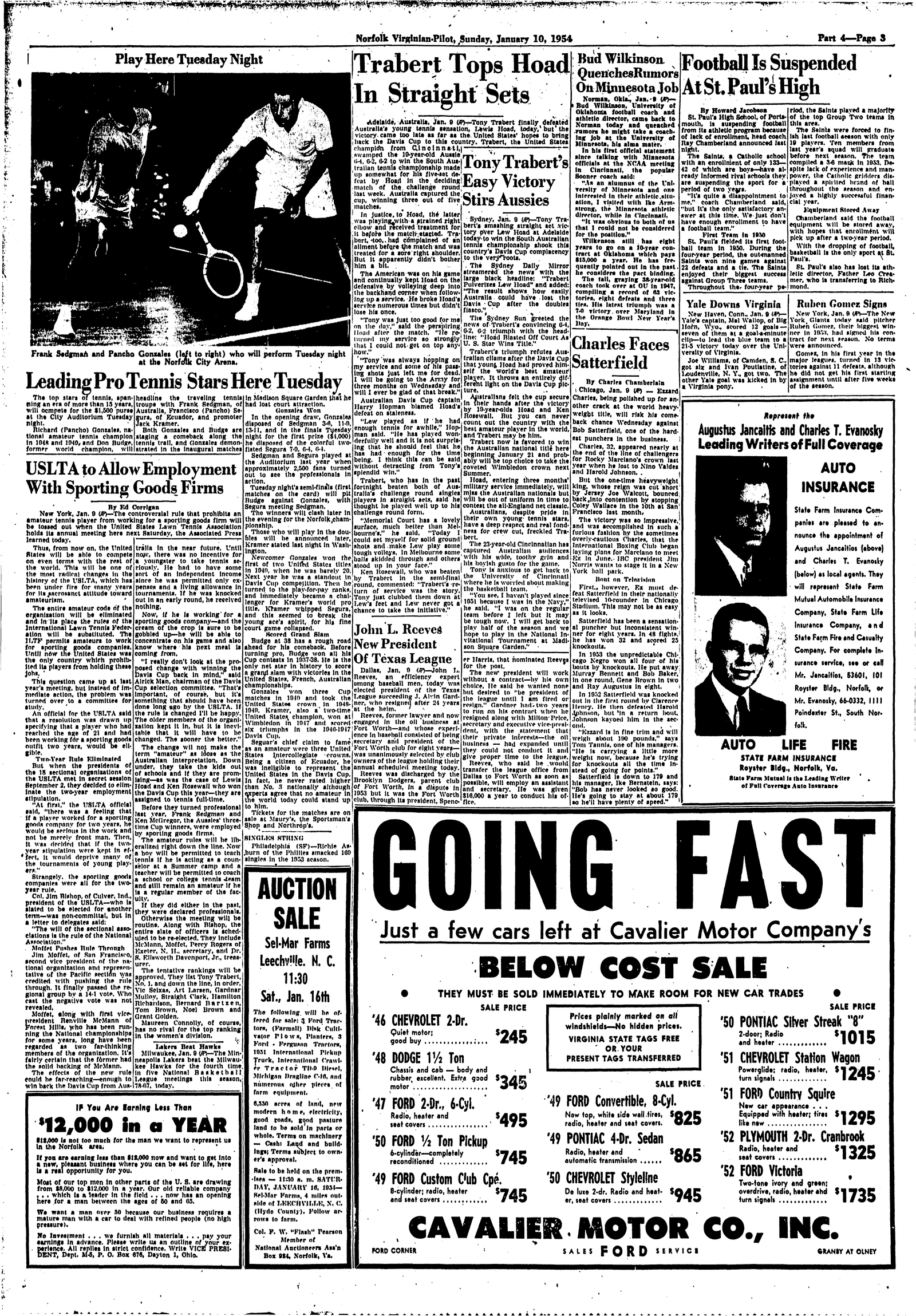
EDITOR’S NOTE: The following is a story from the Jan. 10, 1954, editions of The Virginian-Pilot on the end of football at St. Paul’s High School.
What you will read below attempts to be a faithful re-creation of the original story, with any typographical errors, inconsistent punctuation and inconsistent elements of style.
.By HOWARD JACOBSON
St. Paul’s High School, of Portsmouth, is suspending football from its athletic program because of lack of enrollment, head coach Ray Chamberland announced last night.
The Saints, a Catholic school with an enrollment of only 133 – 42 of which are boys – have already informed rival schools they are suspending the sport for a period of two years.
“It’s quite a disappointment to me,” coach Chamberland said, “but it’s the only satisfactory answer at this time. We just don’t have enough enrollment to have a football team.”
St. Paul’s fielded its first football team in 1950. During the four-year period, the out-manned Saints won nine games against 22 defeats and a tie. The Saints enjoyed their biggest success against Group Three teams.
Throughout the four-year period, the Saints played a majority of the top Group Two teams in this area.
The Saints were forced to finish last football season with only 19 players. Ten members from last year’s squad will graduate before next season. The team compiled a 3-6 mark in 1953. Despite lack of experience and manpower, the Catholic gridders displayed a spirited brand of ball throughout the season and enjoyed a highly successful financial year.
Chamberland said the football equipment will be stored away, with hopes that enrollment will pick up after a two-year period.
With the dropping of football, basketball is the only sport at St. Paul’s.
St. Paul’s also has lost its athletic director, Father Leo Creamer, who is transferring to Richmond.
-
Description text goes here